
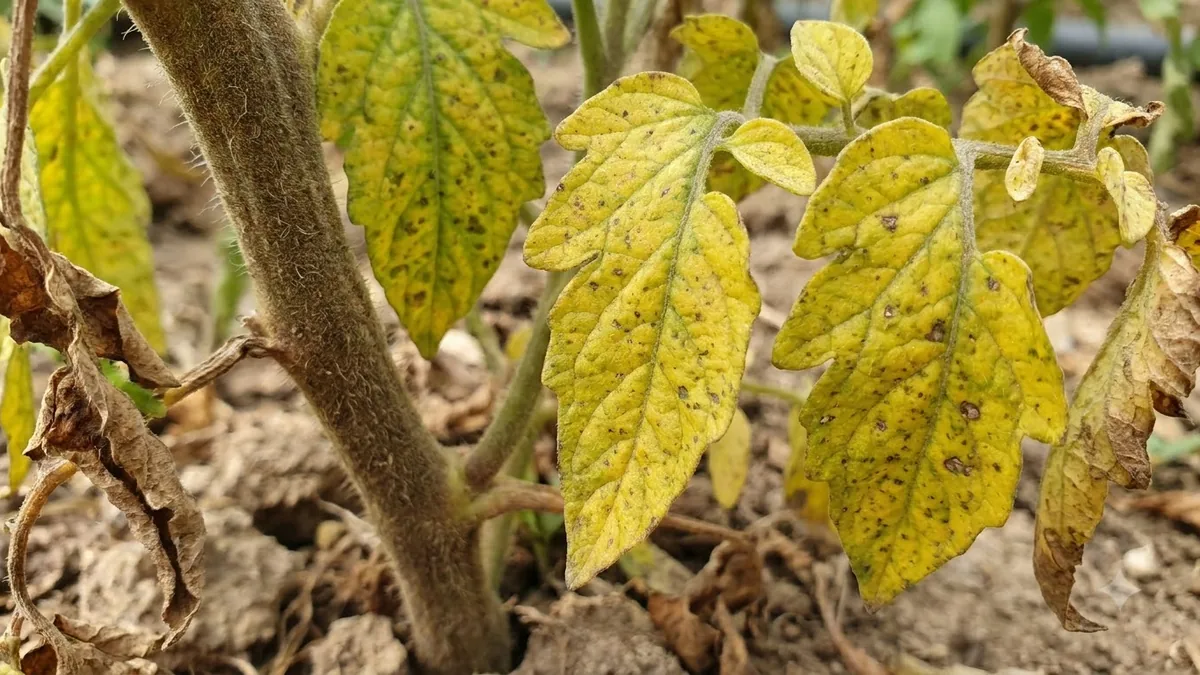
Tomato plant leaves turning yellow is one of the most common questions gardeners search for, and for good reason -- yellowing can mean almost anything from "completely normal" to "your plant is in real trouble." The trick is that different causes leave different clues on the leaf, so a quick visual check usually tells you what's actually going on before you reach for fertilizer or fungicide.
The short answer: in order of likelihood, tomato leaves turning yellow is usually caused by natural lower-leaf aging (harmless), overwatering, underwatering, nitrogen deficiency, or a fungal disease like early blight or septoria leaf spot. Everything below walks through how to tell these apart and what to do about each one.
Work through the diagnostic section first -- it takes thirty seconds and will point you straight to the right fix instead of making you guess.
Start Here -- Which Leaves Are Yellowing?
Before you change your watering routine or reach for a bag of fertilizer, take a close look at exactly where the yellowing is happening and what it looks like up close. The location and pattern of the yellowing narrows down the cause more reliably than anything else. Ask yourself these three questions:
- Which leaves are affected? Only the bottom, oldest leaves near the soil line points to aging, nitrogen deficiency, or early fungal disease. Yellowing all over the plant, top and bottom, usually means a watering or root problem. Yellowing that starts on new growth at the top points to a micronutrient issue like iron deficiency.
- Is the yellowing solid or patterned? A leaf that's evenly yellow all over is different from one that's yellow with the veins still green (called interveinal chlorosis, a classic magnesium or iron sign) or one that's yellow with dark brown or black spots scattered across it (a strong signal of fungal disease).
- Is the plant wilting too? Yellowing plus drooping, even after you've watered, is a bigger red flag than yellowing alone -- it suggests the root system or the plant's water-carrying tissue is compromised.
Keep these three questions in mind as you read through the causes below -- most gardeners can match their plant to one of these sections within a minute of close inspection.
Natural Lower-Leaf Die-Off (Normal, Not a Problem)
How to recognize it: Only the very bottom one or two sets of leaves, closest to the soil, are yellowing. The rest of the plant looks green, vigorous and is putting out new growth normally. There's no spotting, no wilting, and it tends to happen gradually as the plant gets taller.
Why it happens: As a tomato plant grows, it redirects energy and nutrients away from its oldest, least efficient leaves toward new growth and fruit production. This is completely normal aging, the same way a tree drops its oldest leaves first, and it's not a sign anything is wrong.
How to fix it: Nothing to fix -- simply snip off the yellowed leaves with clean shears. Removing them improves airflow around the base of the plant and reduces the risk of fungal spores splashing up from the soil onto healthy foliage, which is a good habit regardless of the cause.
Overwatering or Poor Drainage
How to recognize it: Leaves yellow from the bottom up, but often look slightly soft, thick or curled rather than crisp. The soil stays visibly wet days after watering, and in more advanced cases you may notice a sour smell from the soil or roots that look brown and mushy instead of white and firm.
Why it happens: Tomato roots need oxygen as much as they need water. When soil stays saturated, air pockets in the soil fill with water, roots suffocate, and the plant can't take up nutrients even though water is plentiful -- which is why overwatered plants often show the same yellowing as underwatered ones. Heavy clay soil, containers without enough drainage holes, or watering on a fixed schedule regardless of conditions are the usual culprits.
How to fix it: Let the top two inches of soil dry out before watering again, and check that pots have generous drainage holes. In garden beds, work in compost or coarse organic matter to improve structure, and consider raised beds or mounded rows if drainage is a chronic issue in your yard.
Underwatering
How to recognize it: Leaves yellow and often go crispy or dry at the edges before dropping. The soil is visibly dry an inch or more down, and the whole plant may look slightly wilted even in the morning, before the day's heat has had a chance to stress it further.
Why it happens: Tomatoes are heavy drinkers, especially once they're setting fruit. Inconsistent watering -- long dry stretches followed by a heavy soak -- stresses the plant more than steady moisture does, and yellowing is often the first visible sign of that stress before wilting sets in.
How to fix it: Water deeply and consistently, aiming for about 1 to 2 inches of water per week, adjusted upward during hot, dry spells. A layer of mulch around the base helps the soil hold moisture between waterings, and a drip line or soaker hose does a better job than overhead watering at keeping moisture levels even.
Nitrogen Deficiency
How to recognize it: Older, lower leaves turn a uniform pale yellow, sometimes with a slightly yellow-green tint rather than solid yellow, while new growth at the top stays green. There's no spotting or blotchiness -- just an even, overall lightening of the older foliage.
Why it happens: Nitrogen is mobile within the plant, meaning the plant will pull it out of older leaves and send it to new growth when supply runs short. That's why nitrogen deficiency shows up on the bottom of the plant first -- it's the plant triaging its own resources, not random damage. Sandy soils, heavy rain that leaches nutrients, and beds that haven't been fed since planting are common causes. For a broader look at how nutrient shortages show up across garden crops, see this University of Maryland Extension guide to nutrient deficiency in vegetable plants.
How to fix it: Feed with a balanced or slightly nitrogen-forward fertilizer, or side-dress with compost or aged manure. Avoid overcorrecting with too much nitrogen, though -- excess nitrogen pushes lush leafy growth at the expense of flowers and fruit, so moderate, regular feeding beats one heavy dose.
Magnesium or Iron Deficiency (Interveinal Chlorosis)
How to recognize it: The leaf turns yellow between the veins while the veins themselves stay green, creating a distinctive marbled or lace-like pattern. Magnesium deficiency typically shows this pattern on older, lower leaves, while iron deficiency shows the same pattern on new growth at the top of the plant.
Why it happens: Magnesium is a core component of chlorophyll, so a shortage shows up directly as lost green color. Iron is needed to produce chlorophyll but doesn't move easily within the plant, which is why an iron shortage always shows up on the newest leaves first rather than the oldest. Both deficiencies are more common in soil that's too acidic or too alkaline for the nutrient to be available to the roots, even if it's technically present in the soil.
How to fix it: For magnesium, a diluted Epsom salt drench (about 1 tablespoon per gallon of water) is a fast, well-known home fix. For iron, a chelated iron foliar spray works faster than soil amendments. In both cases, testing and correcting your soil pH toward the tomato-friendly range of 6.2 to 6.8 solves the underlying issue rather than just treating symptoms.
Early Blight or Septoria Leaf Spot (Yellow With Dark Spotting)
How to recognize it: Yellow leaves with distinct dark brown, black or tan spots is the giveaway here -- this is not a plain yellowing issue but a disease issue. Early blight produces larger brown spots, often with a target-like ring pattern, mostly on older leaves; septoria leaf spot produces many small spots with dark borders and pale centers, also starting low on the plant. Both cause the surrounding leaf tissue to yellow and eventually the whole leaf to die and drop.
Why it happens: Both are fungal diseases that overwinter in soil and plant debris, then splash up onto lower leaves during rain or overhead watering. Warm, humid weather and poor airflow around the base of the plant are what let these fungi take hold and spread.
How to fix it: Remove and destroy affected leaves immediately -- don't compost them. Water at the soil line instead of overhead, mulch to stop soil from splashing onto leaves, and improve spacing and pruning for airflow. A copper-based or other labeled fungicide can slow an active outbreak, but prevention through airflow and watering habits matters more than any spray. For side-by-side photos and management steps, University of Maryland Extension's guide to septoria leaf spot on tomatoes is a useful reference.
When Yellow Leaves Mean a Bigger Problem
Most yellowing falls into one of the categories above and is manageable with a watering or feeding adjustment. But if yellowing is paired with wilting across the whole plant -- especially wilting on just one side, or leaves that stay droopy even after a thorough watering -- treat it as urgent. That combination is the classic sign of fusarium wilt or verticillium wilt, soil-borne fungal diseases that clog the plant's water-conducting tissue from the inside.
There's no cure for either wilt once a plant is infected. Pull and destroy the affected plant to protect the rest of your bed, avoid planting tomatoes (or other Solanaceae crops) in that same soil for several years, and look for wilt-resistant varieties -- marked with a "V" or "F" on seed packets -- next season. University of Maryland Extension's guide to fusarium wilt in home tomato gardens has more detail on resistant varieties and long-term soil management.
Avoiding Misdiagnosis: Look-Alikes That Aren't Actually a Yellowing Problem
A handful of other garden issues get mistaken for the causes above because they also leave leaves discolored, but they call for a completely different response. Ruling these out first can save you from treating a plant for a nutrient or disease problem it doesn't actually have.
- Herbicide drift. Leaves that look yellow but are also cupped, twisted, or oddly narrow -- especially if a neighbor recently sprayed lawn weed killer nearby -- point to herbicide exposure rather than a nutrient or watering issue. The distortion in leaf shape is the giveaway; true nutrient yellowing leaves the shape of the leaf normal.
- Sunscald and heat stress. During a heat wave, leaves directly exposed to intense afternoon sun can bleach to a pale yellow-white, almost papery patch instead of yellowing evenly. This stays localized to the sun-facing side of the plant and doesn't spread the way a true nutrient deficiency does.
- Transplant shock. Young seedlings that were just moved into the garden or a larger pot often show a flush of pale or yellow lower leaves in the first week or two while roots re-establish. This resolves on its own and doesn't call for fertilizer or fungicide.
- End-of-season senescence. Once a tomato plant has been fruiting for months and cooler weather sets in, an all-over yellowing and slowdown in new growth is usually the plant naturally winding down for the season, not a disease taking hold late.
- Fertilizer burn. Ironically, over-feeding can also cause yellowing, but it's usually paired with crispy, browning leaf edges rather than the gradual, uniform yellowing of a true deficiency. If you fed heavily right before symptoms appeared, suspect burn rather than shortage.
If a plant doesn't cleanly match any of the causes above, it's worth ruling out one of these look-alikes before you change your watering or feeding routine.
How to Prevent Yellow Leaves Next Season
- Water consistently. Deep, even watering on a regular schedule prevents both the overwatering and underwatering causes of yellowing, which together account for a large share of cases.
- Mulch the base of the plant. A two- to three-inch layer of straw or shredded bark holds soil moisture steady and stops fungal spores in the soil from splashing onto lower leaves.
- Keep to a feeding schedule. Work compost into the bed before planting, then feed every few weeks through the season rather than waiting for a deficiency to show up.
- Improve airflow and spacing. Give plants 24 to 36 inches of space and prune lower foliage as the plant fills out -- crowded, humid conditions are exactly what fungal disease needs to spread.
- Rotate your beds. Avoid planting tomatoes in the same spot two years running. A three- to four-year rotation starves out soil-borne fungi like the ones behind early blight and fusarium wilt.
Your First-Week Action Plan
If you're standing in front of a yellowing tomato plant right now and just want to know what to actually do today, work through these steps in order rather than trying every fix at once.
- Day 1: Inspect and diagnose. Walk the plant and note which leaves are affected, whether there's any spotting, and whether the plant is wilting. Match what you see to a cause above rather than guessing.
- Day 1: Check the soil by hand. Push a finger two inches into the soil near the base. Wet and heavy points toward overwatering or drainage; dry and crumbly points toward underwatering. This one check rules in or out the two most common causes almost immediately.
- Day 2: Prune the affected leaves. Remove yellowed leaves with clean, disinfected shears, especially any with spotting. Bag or dispose of diseased material away from the garden -- don't add it to the compost pile.
- Days 2-3: Apply one targeted fix. Adjust your watering schedule, apply a balanced fertilizer, or start a copper-based fungicide, depending on what you diagnosed. Avoid stacking multiple fixes at once, since that makes it hard to tell what actually worked.
- Days 4-7: Watch the new growth. New leaves coming in green and healthy is the clearest sign you diagnosed correctly. If yellowing keeps spreading to new growth despite the fix, revisit the diagnostic questions and consider whether a wilt disease is a possibility.
Most watering- and nutrient-related yellowing responds within about a week; disease-related yellowing takes longer to stop spreading even after you've corrected the underlying cause.
Frequently Asked Questions
Why are the leaves on my tomato plant turning yellow?
The most common reasons are natural aging of the lowest leaves, inconsistent watering (too much or too little), nitrogen deficiency, or a fungal disease like early blight or septoria leaf spot. Check which leaves are affected and whether there's any spotting to narrow it down.
Should I remove yellow leaves from my tomato plant?
Yes, in most cases. Pruning off yellow leaves stops fungal spores from spreading to healthy foliage and lets the plant put its energy into fruit instead of maintaining damaged leaves. Always disinfect pruning shears between plants.
Can yellow tomato leaves turn green again?
A leaf that has fully yellowed will not turn green again -- the chlorophyll breakdown is permanent for that leaf. But if you fix the underlying cause, new growth will come in green and healthy, and the plant as a whole will recover.
Is it normal for the very bottom leaves to always turn yellow?
Yes. Even on a completely healthy plant, the lowest one or two sets of leaves will yellow and drop over the course of the season as the plant redirects energy to new growth and fruit. As long as it's limited to the oldest leaves and the rest of the plant stays green and vigorous, this is routine maintenance, not a symptom to chase.
How fast can overwatering cause tomato leaves to turn yellow?
In warm weather with consistently saturated soil, roots can start suffocating within a few days, and visible yellowing on the lower leaves often follows within a week to ten days. Container-grown plants with poor drainage tend to show it fastest since there's less soil volume to buffer excess water.
Does yellowing spread from one tomato plant to another?
It depends on the cause. Yellowing from watering, aging or nutrient deficiency stays with the individual plant and won't move to its neighbors. Yellowing from a fungal disease like early blight or septoria leaf spot can absolutely spread between plants, since spores travel through water splash, wind, tools and even hands, which is why prompt pruning and cleanup matter.
What's the difference between yellowing from heat stress and yellowing from disease?
Heat stress tends to bleach or pale the leaves most exposed to direct afternoon sun, often with a papery texture, and it improves once temperatures drop or the plant gets afternoon shade. Disease-related yellowing usually starts on lower leaves regardless of sun exposure, comes with visible spotting, and keeps progressing until you remove the affected foliage and treat the underlying fungus.
Do yellow leaves mean my tomato plant is going to die?
Not usually. Most causes of yellowing -- aging, watering issues, nutrient deficiency, and even early blight or septoria leaf spot -- are manageable and rarely kill an otherwise healthy plant. The exceptions are advanced fusarium or verticillium wilt, which are much more serious, so it's worth ruling those out if yellowing comes with wilting that doesn't improve after watering.
Can too much fertilizer make tomato leaves turn yellow?
Yes. Over-fertilizing, especially with a concentrated liquid feed, can scorch roots and cause yellowing that's often paired with crispy or browned leaf edges rather than the smooth, even yellowing of a true deficiency. If symptoms appeared shortly after a heavy feeding, flushing the soil with plain water and holding off on fertilizer for a couple of weeks is usually the fix.
Why are my tomato seedling's leaves turning yellow?
Seedlings and young transplants yellow for slightly different reasons than mature plants -- most often transplant shock, a pot that's staying too wet, or a nitrogen shortage in a light seed-starting mix that hasn't been fed yet. Because seedlings have such a small root system, both overwatering and underwatering show up faster and more dramatically than they would on an established plant.
Conclusion
Yellow leaves on a tomato plant are rarely a mystery once you know where to look. Check which leaves are affected and whether there's spotting first, match the pattern to a cause above, and adjust watering, feeding or airflow accordingly -- most plants bounce back within a couple of weeks of the right fix.
Thanks for reading!