
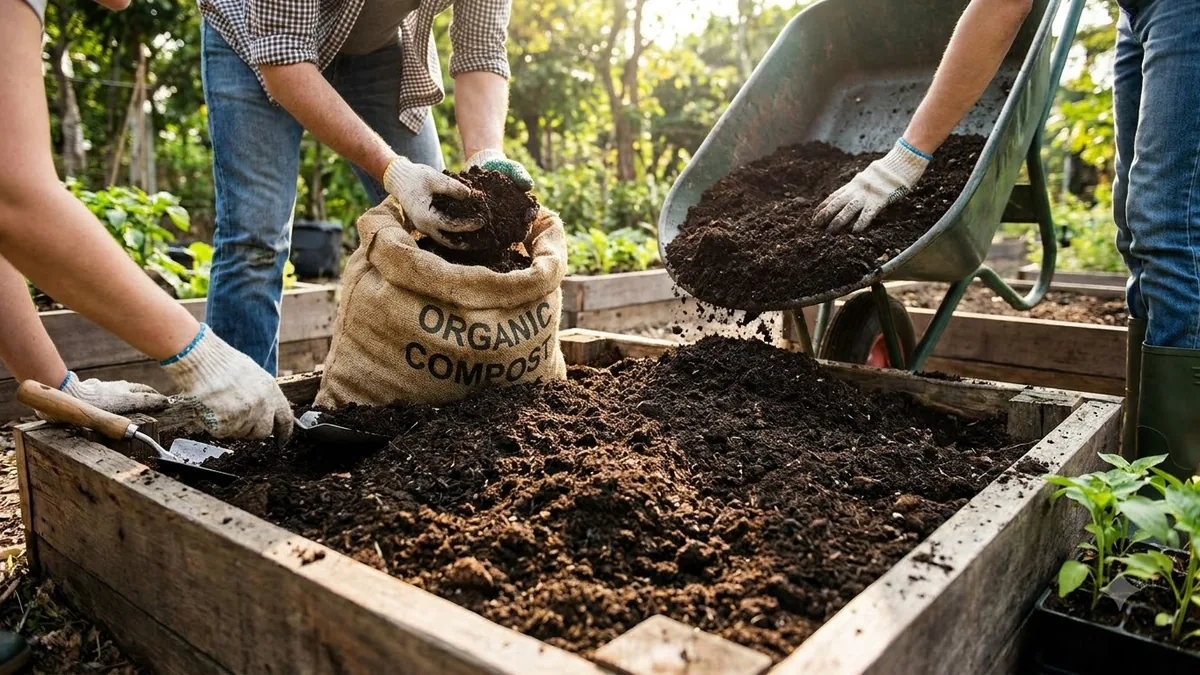
A raised bed is only as good as what you fill it with. Build the sturdiest cedar frame on the block and set it on a patch of ordinary yard dirt, and you'll still end up with stunted roots, standing water after every rain, and vegetables that never quite take off. The frame is just a container -- raised bed soil is what actually feeds the plants.
The short answer: a good raised bed soil mix is roughly 60% quality topsoil, 30% compost and 10% aeration material like perlite or coarse sand. Plain garden soil or bagged topsoil on its own compacts too easily in a contained space, drains poorly, and doesn't carry enough nutrients to support heavy-feeding vegetables all season.
Below is why that ratio works, two DIY recipes you can mix yourself, how to decide between bagged soil and building your own blend, and how much you'll actually need to fill your bed.
Why You Can't Just Fill a Raised Bed With Garden Soil
In the ground, native soil has years of roots, worms and freeze-thaw cycles working through it to keep it loose. A raised bed doesn't get any of that head start. Pack ordinary garden soil or plain topsoil into a contained frame and it settles into a dense, compacted layer within a season -- there's no surrounding soil structure to keep it aerated, and the walls of the bed prevent the natural give that loose native ground has.
Compacted soil causes two problems at once. First, water either pools on the surface or drains straight through without being held where roots can use it, since a raised bed's improved drainage only helps if the soil itself has structure to hold moisture in the first place. Second, dense soil physically resists root growth -- carrots fork, tomato roots stay shallow, and everything grows slower than it should. On top of that, most garden soil and topsoil are simply mineral fill: they carry little organic matter, so even where roots can push through, there isn't much nutrition waiting for them.
That's why raised beds need an engineered mix rather than a straight scoop of dirt -- something that combines mineral body, organic nutrition and drainage in one blend.
The Ideal Raised Bed Soil Mix
Most experienced raised bed gardeners land on some version of the same three-part formula. The most reliable raised garden bed soil ratio is about 60% topsoil, 30% compost and 10% aeration material, and each ingredient is doing a distinct job.
- Topsoil (about 60%) -- This is the bulk and structure of the mix. Look for screened topsoil that's genuinely soil, not fill dirt or subsoil sold under the same label; a bag that's mostly clay or sand defeats the purpose. Topsoil anchors roots and holds the mix together between waterings.
- Compost (about 30%) -- This is where the nutrition and biology come from. A mix of at least two compost sources -- say, mushroom compost and composted manure, or a bagged blend plus your own kitchen compost -- gives a broader range of nutrients than any single source alone. Compost also feeds the microbial life that keeps soil structure loose over time, which is exactly what a contained bed is missing.
- Aeration material (about 10%) -- Perlite, vermiculite or coarse builder's sand keeps the mix from compacting as the compost breaks down and settles. Perlite and coarse sand mainly improve drainage; vermiculite does the same while also holding a bit more moisture, which is useful in raised beds that dry out fast in full sun.
This is a starting ratio, not a rulebook -- gardeners in heavy rainfall regions often push aeration material up toward 15-20%, while those in hot, dry climates lean toward the vermiculite end for extra moisture retention.
Soil pH Considerations for Raised Beds
Getting the topsoil-compost-aeration ratio right solves texture and drainage, but it doesn't guarantee your plants can actually use the nutrients sitting in that soil -- pH does. Most vegetables grow best in slightly acidic soil, roughly pH 6.0 to 6.5, according to Clemson Cooperative Extension's guidance on soil pH and nutrient availability -- outside that range, nutrients like phosphorus and iron can be present in the soil but effectively locked away from plant roots.
Freshly built raised beds tend to skew slightly alkaline rather than acidic, since mature compost -- the biggest single ingredient by volume after topsoil -- is often close to neutral or a touch above it. A reading in the 6.5 to 7.2 range is common in a compost-heavy mix and generally doesn't need correcting. It's only worth adjusting pH once a test confirms it's actually off, rather than amending on a guess, since over-correcting a fine mix can just swing the problem the other direction.
A simple home test kit will get you in the right ballpark, but for a mix as important as what's going into a new bed, sending a sample to your local state extension soil testing lab is worth the few dollars it costs -- results come back with both a pH reading and specific nutrient levels, so you know exactly what, if anything, needs correcting. If the test comes back too acidic, working in a modest amount of garden lime raises pH; if it's too alkaline, elemental sulfur or pine bark fines will bring it down. Retest three to six months after any amendment, since pH shifts slowly and overcorrecting is easy to do if you don't wait to see the actual result.
DIY Raised Bed Soil Recipes
If you'd rather measure out your own raised bed soil mix than buy a pre-blended bag, here are two recipes -- one built for cost, one built around the classic square-foot-gardening formula.
The Budget Mix
This recipe leans on bulk topsoil and compost, which are the cheapest raised bed soil components by volume, and keeps the pricier aeration material to a minimum.
- 6 parts screened topsoil
- 3 parts compost (blend two sources if you can -- for example, mushroom compost plus composted cow manure)
- 1 part coarse sand or perlite
Mix everything on a tarp before shoveling it into the bed so the compost and aeration material are distributed evenly, not layered. This is the most budget-friendly route for filling a large bed, since bulk topsoil and compost from a landscape supplier are far cheaper per cubic foot than bagged products.
The Square-Foot-Gardening Blend ("Mel's Mix")
Popularized by square-foot gardening, this blend skips soil-based topsoil entirely in favor of a lightweight, soilless mix that's exceptionally well-draining and nearly weed-free.
- 1/3 compost (ideally from at least three different sources, for nutrient diversity)
- 1/3 peat moss or coconut coir (coir is the more sustainable choice, since peat harvesting depletes slow-forming bogs)
- 1/3 coarse vermiculite
This mix is lighter, drains faster and resists compaction better than a topsoil-based blend, which makes it a strong choice for raised beds on a patio, deck or hard surface where weight matters. The tradeoff is that it holds fewer minerals than a topsoil-based mix and typically needs more frequent feeding through the season to keep heavy feeders like tomatoes producing.
How Soil Needs Differ by What You're Growing
The 60/30/10 ratio is a dependable all-purpose starting point, but it's a baseline to adjust from, not a fixed recipe every crop needs equally. Once the bed is established, small tweaks to that ratio -- crop by crop, or bed by bed -- can noticeably improve results.
Root vegetables like carrots, parsnips and beets need loose, stone-free, evenly textured soil above almost anything else -- fresh, unfinished compost or chunky amendments cause roots to fork and split as they push around obstacles underground. For a root crop bed, sift out large debris, lean on well-aged compost rather than a fresh batch, and nudge the aeration material slightly above 10% to keep the texture consistently loose all the way down.
Leafy greens and other steady nitrogen users -- lettuce, spinach, kale, cabbage -- do well with compost on the higher end of the range, since they pull nitrogen continuously through a fast growing cycle rather than in one late-season push. Heavy fruiting feeders like tomatoes, peppers, squash and cucumbers benefit from an extra top-up of aged compost or composted manure worked in at planting time, plus an aeration material like vermiculite that holds a bit more moisture through a long, thirsty growing season.
Mediterranean herbs are the exception to almost everything above. Rosemary, thyme, oregano and sage actually perform worse in a rich, moisture-retentive vegetable mix -- they evolved in lean, fast-draining soil and are prone to root rot and weak, leggy growth when compost and moisture are too abundant. If you're devoting bed space to herbs, a separate section (or a dedicated small bed) mixed closer to 70-80% mineral material -- more sand or perlite, a smaller share of compost -- suits them far better than the standard vegetable ratio. As Rutgers Cooperative Extension's fact sheet on raised bed soils notes, native mineral soils blended with modest, well-sourced compost often make an ideal growing medium precisely because they avoid the excess organic matter that some plantings simply don't need.
Buying Bagged Soil vs. Mixing Your Own
Bagged "raised bed soil" products are the easiest route -- you pour, you plant -- but they cost noticeably more per cubic foot than sourcing bulk materials and mixing your own. For a single small bed, a few bags is barely a decision. For multiple beds or anything over about 20 cubic feet, the price difference adds up fast, and bulk delivery from a landscape supplier usually works out cheaper even after accounting for your own labor.
The case for bagged soil is convenience and consistency: a reputable bagged blend is pre-tested, evenly mixed and ready to use the same afternoon. The case for mixing your own is cost and control -- you decide exactly how much compost, drainage material and organic matter goes in, and you can source organic raised bed soil components individually if going fully organic matters to you, rather than trusting a generic bag's ingredient list.
A practical middle ground many gardeners land on: buy bagged topsoil and compost for the bulk of the mix, then add your own aeration material and any extras (worm castings, aged manure) to customize it -- less labor than sourcing everything in bulk, less cost than an all-in-one bagged raised bed soil product.
Bagged vs. Bulk vs. DIY: A Quick Cost Comparison
Prices vary by region and supplier, but the relative gap between these three approaches holds fairly steady. For a mid-size 4x8 bed filled 12 inches deep (32 cubic feet), here's roughly how the three routes compare:
| Approach | Approx. cost for 32 cu ft | Best for |
|---|---|---|
| Bagged raised bed soil | $130-$220 | A single small bed, first-time gardeners, convenience |
| Bulk topsoil + compost delivery | $60-$110 | Multiple beds, or anything over about 20 cubic feet |
| Fully DIY (sourced separately, mixed by hand) | $50-$90 | Gardeners who want full control over ingredients and organic sourcing |
Bagged soil carries the highest per-cubic-foot price because you're paying for pre-mixing, bagging and transport convenience. Bulk delivery closes most of that gap since suppliers sell topsoil and compost by the cubic yard at a fraction of the bagged price, though most have a delivery minimum that only pays off once you're filling more than one bed. Fully DIY sourcing -- buying components separately and blending them yourself -- is typically the cheapest route by volume, but it costs the most in time and effort, from hauling material to mixing it thoroughly before it goes into the bed.
How Much Soil Do You Need?
To calculate volume, multiply the bed's length, width and depth (all in feet) to get cubic feet, then divide by 27 if you want cubic yards for a bulk delivery order. A standard 4x8-foot bed filled 12 inches deep needs 32 cubic feet of soil -- that's roughly nine to ten standard 3.5-cubic-foot bags, or a little over one cubic yard if you're ordering bulk. Order slightly more than the math says, since soil settles by 10-20% once it's watered in.
For deep beds, you don't have to fill the entire depth with soil mix. Two space-saving base-layer tricks can cut your soil needs substantially:
- Hugelkultur-style base: Pack the bottom third of a deep bed with untreated logs, branches and woody debris before adding soil on top. As the wood breaks down over several years, it holds moisture and slowly releases nutrients, so you're only buying soil mix for the upper two-thirds of the bed.
- Lasagna-method base: Layer flattened cardboard directly on the ground to smother weeds and grass, then build up alternating layers of "brown" material (dry leaves, straw) and "green" material (grass clippings, kitchen scraps) before topping with your soil mix. This also breaks down into rich organic matter over time.
Both tricks work best in beds at least 18-24 inches deep; for shallower beds (under a foot), it's usually simpler to just fill the whole depth with your soil mix.
Refreshing Raised Bed Soil Each Season
You don't need to dig out and replace raised bed soil every year -- a well-built mix keeps working for several seasons if you maintain it. Each spring, before planting, top off the bed with 2-3 inches of fresh compost and work it into the top few inches of existing soil. This replaces the organic matter and nutrients that last year's crop pulled out and that natural decomposition broke down over winter.
Do the same again in late summer or early fall if you're pulling out a heavy-feeding crop like tomatoes or squash and replanting the same bed for a fall crop. Every three to four years, it's worth checking soil depth and structure -- if the bed has settled significantly or the mix has become dense and slow-draining, that's the point to work in a fresh batch of compost and aeration material rather than just topdressing. A quick soil test every couple of years will also tell you whether pH or specific nutrients need attention beyond what routine compost additions provide.
Signs Your Raised Bed Soil Needs a Full Refresh
Topdressing with compost handles routine upkeep, but a mix can eventually wear out faster than expected -- especially in a bed that's been planted heavily every season without a break. A handful of warning signs usually show up together when it's time for a full refresh rather than another light topdressing:
- Water pools on the surface or vanishes almost instantly -- both point to lost structure, whether from compaction or from organic matter that's broken down to the point it no longer holds moisture.
- The bed has visibly settled, with the soil level sitting several inches below the top of the frame even after topdressing.
- Plants stay stunted or pale despite regular fertilizing, suggesting the underlying soil biology and structure -- not just nutrient levels -- has broken down.
- The soil feels dense, sticky or claylike when squeezed, rather than crumbling apart the way a healthy mix should.
- Weeds outcompete everything else you plant, which often means the organic matter that once supported vegetables has decomposed into something closer to inert fill.
- A sour or sulfurous smell when you dig in points to anaerobic conditions deeper in the bed, usually from prolonged waterlogging.
One or two of these on their own aren't cause for alarm. But when several show up at once, it's more efficient to dig out the top 8-12 inches and rebuild it with a fresh batch of topsoil, compost and aeration material than to keep topdressing a mix that's lost its structure.
Frequently Asked Questions
What is the best soil for raised garden beds?
The best soil for raised garden beds is a blend of roughly 60% quality topsoil, 30% compost and 10% aeration material like perlite, vermiculite or coarse sand. This combination drains well, holds enough moisture and nutrients for vegetables, and stays loose enough for roots to spread freely.
Can I just use topsoil in a raised bed?
No -- plain topsoil alone tends to compact over time in a raised bed and rarely has enough organic matter or nutrients to support heavy-feeding vegetables. It works as the base of a mix, but should always be blended with compost and an aeration material.
How often should I replace the soil in a raised bed?
You don't need to fully replace raised bed soil every year. Instead, top off the bed with 2-3 inches of fresh compost each spring and again after a heavy summer crop comes out, which replaces nutrients and organic matter as the existing soil settles and breaks down.
How much does it cost to fill a raised bed with soil?
For a standard 4x8-foot bed filled 12 inches deep (32 cubic feet), expect to spend roughly $130-$220 on bagged raised bed soil, or $50-$110 if you source topsoil and compost in bulk from a landscape supplier and mix your own. The exact price depends on your region, your supplier, and how much of the mix you're buying pre-blended versus sourcing and combining yourself.
What's the difference between raised bed soil and potting mix?
Potting mix is a lightweight, soilless blend of ingredients like peat moss, coconut coir and perlite, designed to drain fast in a small, enclosed container. Raised bed soil is denser and includes real topsoil, giving it more mineral content and water-holding capacity to support a bed that isn't watered as frequently as a pot. Using potting mix alone in a raised bed usually means it dries out too quickly and needs far more frequent watering and feeding.
Does raised bed soil need to be turned or aerated?
Not on a regular basis. Frequent tilling actually disrupts the soil structure and microbial life that keep a raised bed mix loose in the first place, so most gardeners get better long-term results leaving the soil undisturbed and topdressing with compost instead. Light aeration is only worth doing if the soil has become visibly compacted -- a broadfork or garden fork worked in gently, without fully turning the bed over, is usually enough.
Can I mix my yard's native soil into a raised bed?
You can, in small amounts, but it's rarely a good idea to rely on it heavily. Native soil can bring in weed seeds, poor drainage, or even contamination if your yard's soil hasn't been tested, and it defeats some of the point of building a raised bed in the first place. If you do want to incorporate some, blend in no more than a modest fraction alongside a full batch of topsoil, compost and aeration material, and skip it entirely if you have any doubt about what's in your native soil.
How deep should the soil be in a raised bed for vegetables?
Most vegetables do well with 12 inches of soil depth, which covers the root zone for everything from lettuce to peppers. Deep-rooted crops like tomatoes, squash and root vegetables such as carrots or parsnips perform better with 16-18 inches, and dedicated root crop beds benefit from going even deeper if you want long, straight roots. Shallow-rooted herbs and salad greens can get by with as little as 6-8 inches.
Do I need to remove grass or sod before filling a raised bed?
No -- in fact, leaving it in place and smothering it is usually the better approach. Lay flattened cardboard or several sheets of newspaper directly over the grass before adding soil; it blocks light so the grass dies back and decomposes in place, adding organic matter instead of becoming a barrier you have to dig out. Removing sod first only makes sense if the grass is an aggressive spreading variety likely to push up through the cardboard.
Can I use compost alone to fill a raised bed?
Straight compost isn't a good long-term fill on its own -- it continues breaking down and shrinking after it's in the bed, and it doesn't hold structure or moisture the way a blend with topsoil and aeration material does. It's an excellent ingredient at roughly 30% of the mix, and useful as an annual topdressing, but a bed filled entirely with compost will settle dramatically within the first season and need frequent replenishing.
Conclusion
Good raised bed soil isn't complicated, but it does need to be deliberate -- a scoop of yard dirt won't do what a proper blend does. Start with the 60/30/10 topsoil-compost-aeration ratio, adjust it slightly for your climate, and top it off with compost each spring, and the bed will keep performing season after season with far less troubleshooting than a bed filled with plain soil.
Thanks for reading!