
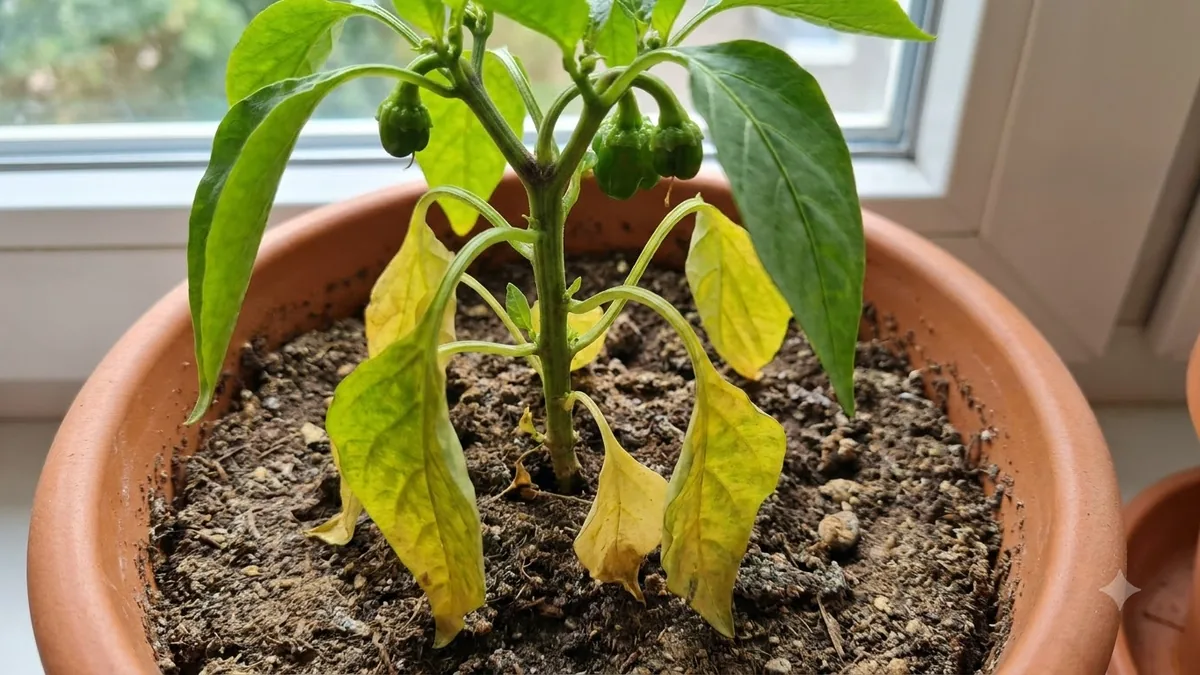
Pepper plant leaves turning yellow is one of the most common questions gardeners search for, and for good reason -- peppers are quick to show stress in their foliage, but slow to explain exactly what's wrong. The yellowing itself is just a symptom; the real question is what's causing it, and that usually comes down to reading where on the plant the yellow leaves are showing up and when they appeared.
The short answer: for pepper plants specifically, the most likely cause is overwatering or wet roots -- peppers have shallow, fine root systems that are more sensitive to soggy soil than tomatoes or most other vegetable garden crops. After that, the next most common causes, in rough order of likelihood, are cold stress or transplant shock, nitrogen deficiency, and simple natural lower-leaf drop as the plant matures.
Below is how to narrow down which one you're dealing with, a breakdown of each cause with how to recognize and fix it, and a prevention checklist so you're not troubleshooting the same problem again next season.
Start Here -- Which Leaves Are Yellowing and When?
Before diagnosing anything, take thirty seconds to look at the pattern. Where the yellowing shows up on the plant, and when it started, narrows the list of likely causes dramatically.
- Only the bottom, oldest leaves are yellow, rest of plant healthy. Usually natural lower-leaf aging or a nitrogen deficiency -- both start at the base and work upward.
- The whole plant looks pale or yellow-green. Points toward overwatering, wet roots, or a broader nutrient shortage.
- Yellowing appeared within a week or two of transplanting. Transplant shock or cold soil is the likely culprit.
- Yellowing showed up mid-season on an established plant. Think watering habits first, then nutrients.
- Yellow areas are stippled, speckled, or have webbing nearby. A strong sign of pest damage.
Keep this pattern in mind below -- most gardeners can narrow it down to one or two likely culprits before they reach the fix.
Overwatering or Wet Roots
This is the single most common reason pepper plant leaves turn yellow, and it catches a lot of gardeners off guard because it feels like the opposite of neglect. Pepper roots are finer and shallower than a tomato's, so when soil stays saturated, the roots are starved of oxygen and begin to suffocate within days rather than weeks. A stressed, oxygen-starved root system can't move water and nutrients up into the plant, and the leaves yellow as a direct result -- even though there's plenty of water in the soil.
How to recognize it: yellowing spreads across the whole plant rather than starting at the bottom, leaves may look slightly droopy or soft even though the soil is wet, and the soil surface stays damp for more than a day or two after watering. In containers, check for standing water in the saucer.
How to fix it: let the top two inches of soil dry out completely before watering again, and confirm that pots and beds actually drain -- a saucer that holds water or heavy clay soil will keep roots wet long after you stop watering. Water deeply but less often rather than a little every day, and hold off on fertilizing until the plant shows signs of recovery, since feeding a stressed root system won't help.
Cold Stress or Transplant Shock
Peppers are native to warm climates and are noticeably more cold-sensitive than tomatoes. Growth stalls and leaves start to yellow when soil or air temperatures stay below roughly 55°F, and a hard cold snap can trigger yellowing within a couple of days. Transplanting into cold soil compounds the problem, since the shock of the move on top of the cold slows root establishment even further.
How to recognize it: yellowing appears shortly after transplanting or after a stretch of cool nights, the plant looks stunted or simply stops putting on new growth, and leaves may curl slightly along with the yellowing.
How to fix it: there's no quick reversal for cold-damaged leaves, but you can stop further damage by covering plants overnight when temperatures dip, moving containers somewhere sheltered, or using row cover in the garden. Be patient -- once temperatures stabilize in the 65-85°F range peppers prefer, new growth should come in green and healthy within a week or two.
Nitrogen Deficiency
Nitrogen is the nutrient plants use fastest, and peppers grown in containers or in soil that hasn't been fed in a while tend to run out of it partway through the season. Because nitrogen is mobile within the plant, it moves from older leaves to support new growth first, which is why deficiency symptoms almost always start at the bottom of the plant.
How to recognize it: older, lower leaves turn a uniform pale yellow while the veins stay only slightly lighter than the rest of the leaf, and the yellowing works its way up the plant over time if nothing is done. Growth also tends to slow and stems can look thin.
How to fix it: feed with a balanced or slightly nitrogen-forward fertilizer formulated for vegetables, following the label rate -- more is not better with peppers, since excess nitrogen pushes leafy growth at the expense of fruit. A dose of fish emulsion or compost tea works well for a faster response between regular feedings. For a closer look at how nitrogen shortfalls show up across garden plants generally, the UC Statewide IPM Program's guide to nitrogen deficiency is a useful reference.
Calcium or Magnesium Deficiency
These two deficiencies look similar to a nitrogen shortage but show up differently on the leaf itself. A magnesium deficiency typically produces yellowing between the veins while the veins themselves stay green, since magnesium -- like nitrogen -- is mobile and gets pulled from older leaves first. Calcium, by contrast, is immobile in the plant, so a shortage shows up as distorted new growth and, in fruit, the pepper equivalent of blossom end rot rather than classic leaf yellowing.
How to recognize it: for magnesium, look for a distinct green-veined, yellow-between-the-veins pattern on lower or mid-plant leaves. For calcium, watch for puckered or curled new leaves and dark, sunken patches on developing fruit rather than yellow leaves alone.
How to fix it: for magnesium, a light drench of Epsom salt dissolved in water (about one tablespoon per gallon) is a fast, low-risk fix. For calcium, the issue is almost always inconsistent watering rather than a true soil shortage -- steady, even moisture lets the plant take up the calcium that's already there. The University of Maryland Extension's guide to nutrient deficiency in vegetable plants is a good next stop if you want to compare magnesium and calcium symptoms side by side with other nutrients.
Pest Damage
Sap-sucking pests don't cause solid yellow leaves the way watering or nutrient problems do -- aphids and spider mites feed on individual cells, leaving behind a stippled or speckled yellowing that's easy to tell apart from the more uniform yellowing of other causes once you know what to look for. Both pests thrive in hot, dry conditions and multiply quickly if they go unnoticed.
How to recognize it: turn a yellowing leaf over and check the underside -- aphids show up as small clustered insects, often with ants nearby tending them, while spider mites show up as fine webbing and tiny specks that move when disturbed. The yellowing itself looks speckled or mottled rather than solid.
How to fix it: knock pests off with a strong spray of water first, then follow up with insecticidal soap or neem oil, reapplying every five to seven days until the population is under control. Improving airflow around the plant and avoiding drought stress -- which spider mites in particular take advantage of -- helps prevent a repeat infestation. If yellowing comes with spots, lesions, or wilting that doesn't fit the pest or nutrient patterns above, it's worth ruling out disease -- NC State Extension's plant pathology guide to pepper diseases covers the most common ones to check for.
Natural Lower-Leaf Aging
Sometimes yellow leaves on a pepper plant aren't a problem at all. As a plant grows, it naturally redirects resources away from its oldest, most shaded lower leaves toward new growth and developing fruit, and those older leaves yellow and drop as a normal part of the process.
How to recognize it: only a leaf or two at the very bottom of an otherwise healthy, actively growing plant is affected, the rest of the foliage is deep green, and the plant continues to flower and set fruit normally.
How to fix it: nothing needs fixing here -- simply remove the yellowed leaf so it's not sitting against the soil, and keep an eye on the rest of the plant. If more than a leaf or two starts going yellow, revisit the other causes above.
Bell Peppers vs. Hot Peppers: Does the Type Matter?
Every cause covered above applies whether you're growing sweet bell peppers, jalapenos, habaneros, or anything in between -- nearly all of the peppers gardeners grow belong to the same Capsicum annuum species, with a handful of favorites like habaneros and scotch bonnets belonging to the closely related Capsicum chinense. Because the underlying biology is so similar across types, cold sensitivity, overwatering risk, and nutrient needs don't differ much by heat level -- what differs is how the yellowing looks and how easily it gets noticed.
Bell peppers carry a smaller number of large, broad leaves, so when one turns yellow it tends to stand out immediately, and a plant can look dramatically affected from just two or three discolored leaves. Hot pepper varieties, especially compact types like cayenne, Thai, and serrano peppers, produce many more, smaller leaves -- the same underlying stress often shows up as light, scattered yellowing across a larger number of leaves rather than a few very yellow ones, which can make it easier to overlook in the early stages.
The one modest difference worth knowing: very hot varieties in the Capsicum chinense group, like habaneros and scotch bonnets, are generally slower to establish a root system after transplanting than a typical bell pepper. That means transplant-related yellowing can take a little longer to resolve on these varieties, even with identical care. Beyond that, the same diagnostic pattern applies no matter the type -- where on the plant the yellowing is happening, and when it started, tells you far more than how hot the pepper is.
How to Fix Yellow Leaves on Pepper Plants
Once you've narrowed down the likely cause, work through this checklist in order -- it's built around the causes that are both most common and easiest to rule in or out first.
- Check the soil moisture. If it's wet a couple of inches down, stop watering and let it dry out first.
- Check recent nighttime temperatures. Below 55°F, shelter or cover the plant and wait for warmer weather.
- Inspect the undersides of yellowing leaves for aphids, webbing or stippling, and treat with insecticidal soap or neem oil if pests are present.
- Note where on the plant the yellowing is happening. Bottom leaves only, on an otherwise healthy plant, usually means aging or nitrogen -- feed with a balanced vegetable fertilizer if growth also looks slow.
- Rule out magnesium if you see a green-veined, yellow-between-the-veins pattern, and treat with a diluted Epsom salt drench.
- Give it time. Most fixes take one to two weeks to show in new growth -- yellowed leaves themselves generally won't turn green again.
Preventing Yellow Leaves Next Season
Most of the causes above are avoidable with a few habits built into your routine from the start of the season. Wait to transplant until nighttime temperatures are reliably above 55°F and soil has warmed -- setting peppers out too early is one of the most common causes of yellowing every spring. Water on a consistent schedule, checking soil moisture with a finger rather than watering on autopilot, and make sure containers and beds drain well so roots never sit wet.
Set up a feeding schedule rather than fertilizing only when problems appear. A balanced vegetable fertilizer every three to four weeks, plus compost worked into the soil at planting time, covers most of the nitrogen, calcium and magnesium peppers need. Finally, check leaf undersides for pests every week or two -- catching aphids or mites early is far easier than treating an established infestation.
Frequently Asked Questions
Why are my pepper plants turning yellow all of a sudden?
A sudden change usually points to a watering or temperature swing rather than a slow nutrient problem. Check the soil moisture first -- if it's been wet for several days, wet roots are the likely cause. If nights have recently dropped into the 40s or 50s Fahrenheit, cold stress is the more likely explanation.
Will yellow pepper leaves turn green again?
A leaf that has fully yellowed usually will not turn green again, but the plant itself can recover once the underlying cause is fixed -- new growth will come in green and healthy. The exception is very mild, early yellowing from a nutrient deficiency, which can sometimes green back up once you correct the feeding.
Should I remove yellow leaves from pepper plants?
Yes, once a leaf has turned mostly or fully yellow, it's no longer contributing much to the plant and is worth removing. Pinch or snip it off cleanly at the stem so the plant can put its energy into healthy foliage and fruit instead.
Do yellow leaves affect pepper fruit production?
A few yellow leaves at the base of an otherwise healthy plant won't meaningfully affect fruit set, since the plant still has plenty of green leaf area to support photosynthesis. Widespread yellowing across the whole plant is a different story -- it usually means the plant is stressed enough that flower and fruit production slow down or stall until the underlying cause is corrected.
How long does transplant shock last in pepper plants?
Transplant shock in peppers typically lasts one to two weeks, though it can stretch to three weeks in cool or unsettled weather. During this period the plant focuses on rebuilding its root system rather than top growth, so yellowing, wilting, or a pause in new leaves is normal. Consistent watering and warm soil temperatures are the biggest factors in shortening recovery time.
Is yellowing worse in hot peppers or bell peppers?
Neither type is inherently more prone to yellowing, since both respond to the same underlying causes -- watering, temperature, and nutrients. Hot peppers tend to show yellowing as scattered spots across more, smaller leaves, while bell peppers often show it as a few larger yellow leaves, which can make bell pepper yellowing look more dramatic even when the underlying cause is just as mild.
Can too much fertilizer cause yellow leaves on pepper plants?
Yes -- over-fertilizing, especially with high-nitrogen or concentrated liquid feeds, can burn pepper roots and cause yellowing, leaf edge browning, or a wilted look even though the soil has plenty of nutrients. If you've recently fertilized and leaves yellowed within a few days, flush the soil thoroughly with plain water and hold off on feeding again until the plant recovers.
Why do pepper leaves turn yellow after a cold night?
A single cold night can shock a pepper plant's roots and slow its ability to take up water and nutrients, which shows up as yellowing over the following day or two even though the air has warmed back up. This is more of a temporary metabolic slowdown than lasting damage, and new growth typically comes in normally once temperatures stabilize.
Can underwatering cause pepper leaves to turn yellow too?
Yes, though it's less common than overwatering. Underwatered pepper plants typically show yellowing along with dry, brittle, or curling leaf edges and a wilted appearance even shortly after watering, whereas overwatered plants tend to look soft and droopy with soil that stays damp for days. Checking soil moisture with a finger is the fastest way to tell the two apart.
How can you tell if yellow leaves are caused by disease rather than a nutrient problem?
Disease-related yellowing usually comes with other clues that nutrient problems don't -- spots, rings, or lesions on the leaf, wilting despite moist soil, discolored stems, or yellowing that spreads unevenly across the plant rather than following the bottom-up or interveinal patterns typical of deficiencies. If you notice these signs, it's worth checking a plant pathology resource before assuming it's a feeding issue.
Conclusion
Pepper plant leaves turning yellow almost always traces back to one of a handful of causes, and the pattern of where and when it's happening does most of the diagnostic work for you. Start by ruling out overwatering and cold stress, since they're both the most common and the easiest to check -- then work through nutrients and pests if the plant doesn't bounce back.
Thanks for reading!