
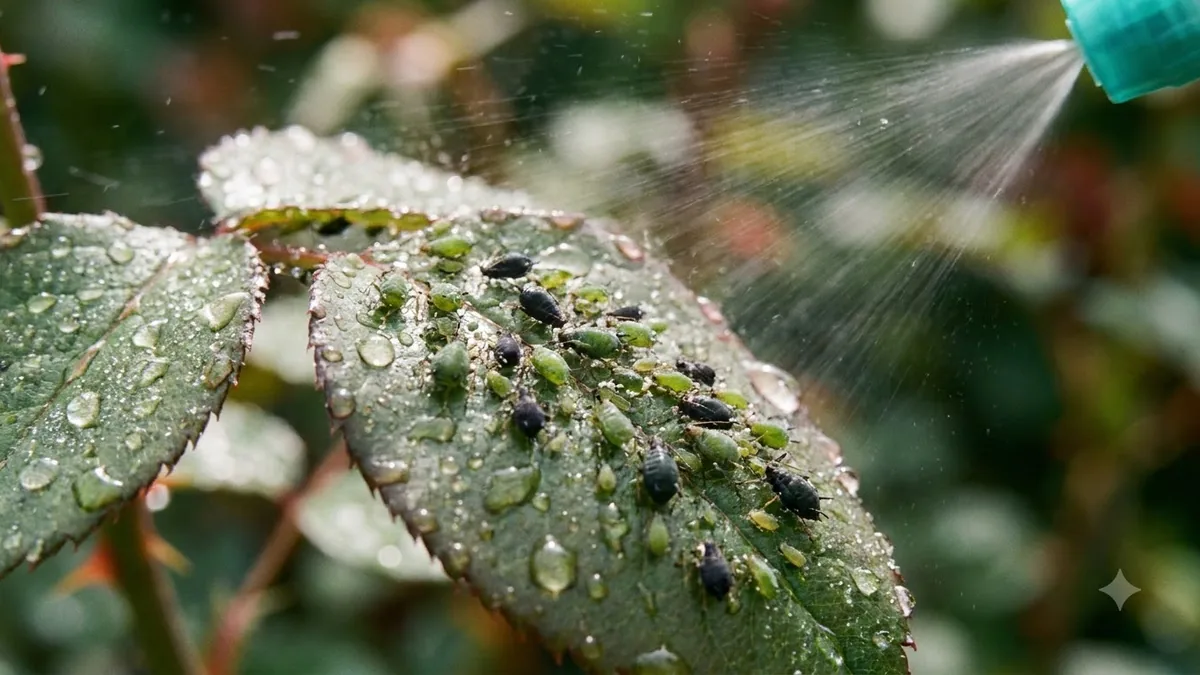
Aphids are the pest most gardeners meet first and fight longest. They're small, they multiply fast, and by the time you notice a few, there are usually a few hundred more hiding on the undersides of your leaves. If you're looking for how to get rid of aphids naturally, the good news is that you don't need harsh chemicals to win -- just the right combination of methods, used consistently.
The short answer: a strong jet of water knocks most aphids off a plant immediately. For infestations that keep coming back, insecticidal soap or neem oil applied every 5-7 days brings populations under control within 2-3 weeks.
Below is how to spot an aphid problem early, the fastest ways to knock numbers down, and the organic aphid control routine that keeps them from coming back.
How to Tell You Have an Aphid Problem
Aphids are tiny, pear-shaped insects -- usually green, but sometimes black, gray, yellow or pink depending on the species -- and they rarely show up one at a time. Look for tight clusters on new growth, flower buds and the undersides of leaves, since that's where the sap is softest and easiest for them to feed on. A few early signs give them away before the colony gets out of hand:
- Sticky residue on leaves and stems. This is honeydew, a sugary waste product aphids excrete as they feed, and it's often the first clue gardeners notice.
- Black, sooty-looking coating on foliage. Sooty mold grows on top of honeydew and can block light from reaching the leaf if left untreated.
- Ants moving up and down your plants. Ants "farm" aphids for their honeydew and will actually protect the colony from predators, so heavy ant traffic is a strong hint you have an infestation.
- Curled, yellowing or distorted leaves. Heavy feeding pulls moisture and nutrients out of new growth faster than the plant can replace them.
Which Plants Are Most Aphid-Prone
Aphids aren't picky about a single host plant, but some crops and ornamentals draw them in far more reliably than others -- usually because of soft, high-sugar growth or a scent particular species of aphid key in on. Roses, nasturtiums, brassicas (cabbage, kale and broccoli), citrus, milkweed and anything in the bean or pea family are classic aphid magnets, and if you grow several of these together, expect them to be the first place a colony shows up each season.
Vegetable gardens have their own hot spots too. Tomatoes and peppers attract aphids to new growth and flower clusters, lettuce and other leafy greens are vulnerable because their tender leaves offer almost no resistance, and fruit trees like apple, plum and cherry commonly host aphids on curling new leaves in spring. Effective long-term control on any of these plants comes from combining several tactics rather than relying on one treatment, a principle laid out clearly in the Clemson Cooperative Extension integrated pest management guide for aphids.
If you know a plant is an aphid magnet, inspect it more often than the rest of your garden -- twice a week rather than once -- and consider using nasturtiums deliberately as a trap crop planted a short distance from your vegetables, since aphids will often colonize the nasturtiums first and leave your food crops alone longer.
Fast, Physical Removal
The fastest way to get rid of aphids on a plant you can reach is simply to spray them off with water. A firm jet from a hose or spray bottle, aimed at the undersides of leaves where aphids cluster, dislodges most of a colony in seconds -- aphids are weak crawlers and rarely make it back onto the plant once knocked to the ground.
For small infestations, hand-picking or squishing aphids between your fingers works just as well and takes only a few minutes on a plant or two. If a shoot tip or single leaf is completely covered and distorted, it's often faster to prune it off entirely and dispose of it away from the garden than to try to clean every aphid off by hand. Repeat water spraying every couple of days for a week, since eggs and stragglers you miss the first time will keep the colony going.
DIY Insecticidal Soap Spray
Insecticidal soap is one of the most reliable natural aphid control methods because it works on contact -- it breaks down the waxy outer coating that protects an aphid's body, causing it to dehydrate, rather than poisoning the plant or lingering in the soil.
To make your own: mix about 2 teaspoons of a mild, pure liquid soap (castile soap works well) into 1 quart of water. Avoid dish detergents with added degreasers or fragrance, which can damage leaf tissue. Pour the mixture into a spray bottle, shake well, and spray it directly onto the aphids themselves -- especially on leaf undersides -- rather than just misting the top of the plant.
- Test on one leaf first and check it after 24 hours, since some plants (particularly those with fuzzy or waxy leaves) can be sensitive to soap sprays.
- Reapply every 5-7 days until you stop seeing live aphids, since soap only kills insects it directly touches and has no lasting effect once it dries.
- Spray in the early morning or evening, not in direct midday sun, to avoid leaf scorch.
Does Neem Oil Kill Aphids?
Yes -- neem oil kills aphids, though it works differently than soap. Neem oil contains azadirachtin, a compound that disrupts an insect's hormone system, so it acts as both a feeding deterrent and a growth regulator: aphids that ingest treated sap stop feeding and struggle to molt or reproduce. It's slower than a soap spray but tends to keep populations suppressed for longer.
Mix about 2 teaspoons of cold-pressed neem oil with 1 teaspoon of mild liquid soap (as an emulsifier) per quart of water, since neem oil doesn't dissolve in water on its own. Shake the sprayer frequently as you go, and coat leaf undersides and stems thoroughly.
Apply neem oil in the evening, never in full sun or high heat -- both to prevent the oil from scorching leaves and to protect bees and other pollinators, which are less active once flowers have closed for the day. Reapply every 7 days, or after rain washes a treatment off.
Bring In Natural Predators
A garden with a healthy population of predatory insects rarely has a serious, lasting aphid problem, because those insects find and clear out colonies faster than most gardeners can spray them. Ladybugs and their larvae are the best-known aphid predator -- a single ladybug larva can eat dozens of aphids a day -- but they're far from the only ones worth attracting:
- Lacewings. Green lacewing larvae are sometimes called "aphid lions" for how aggressively they hunt, and they'll also take on mites and small caterpillars.
- Parasitic wasps. These tiny, harmless-to-humans wasps lay eggs inside aphids; the larvae consume the aphid from within, leaving behind a hollow, papery "mummy" that's actually a good sign your predator population is working.
- Hoverflies. Adult hoverflies look like small bees but don't sting; their larvae are voracious aphid eaters.
To attract these predators, plant flowers with small, shallow blooms that are easy for them to feed on -- sweet alyssum, dill, yarrow, fennel and cosmos are all reliable choices. Skip broad-spectrum insecticides, even organic ones, in areas where you're trying to build up predator populations, since those sprays don't distinguish between pests and the beneficial insects working on your behalf.
Companion Planting as Prevention
Companion planting won't eliminate an active infestation, but it's a genuinely useful layer of aphid repellent built into your garden layout. Alliums like garlic and onions give off a strong scent that makes it harder for aphids to home in on nearby plants, and marigolds planted along a bed edge draw in the same hoverflies and predatory wasps mentioned above. If you're growing tomatoes, this pairs directly with standard tomato companion planting advice -- basil, garlic and marigolds are already recommended tomato neighbors, and aphid resistance is one of the reasons why.
Diatomaceous Earth and Other Options
Food-grade diatomaceous earth kills aphids by physically damaging their outer shell, causing them to dry out and die -- it's a mechanical action rather than a chemical one, which is why it works on soft-bodied insects without harming the plant. Dust it lightly on and around affected foliage in dry weather, since it loses effectiveness once it gets wet and needs to be reapplied after rain or watering.
A few other natural aphid control options worth knowing about:
- Rubbing alcohol. A cotton swab dipped in 70% isopropyl alcohol kills aphids on contact and is useful for small, stubborn clusters on houseplants.
- Garlic spray. Blend a full head of garlic with water, strain, dilute, and spray as a natural aphid repellent -- the strong sulfur compounds are unpleasant to most soft-bodied pests.
- Reflective mulch. Aluminum foil or reflective plastic mulch laid around the base of plants can confuse aphids searching for a landing spot, reducing new colonization.
The Ants-and-Aphids Partnership, and How to Break It
The relationship between ants and aphids is a genuine, well-studied mutualism, not just an odd coincidence gardeners notice. Ants "farm" aphids the way a rancher tends livestock -- stroking them with their antennae to trigger the release of honeydew, then drinking it as a reliable, sugar-rich food source. In exchange, ants act as bodyguards, physically attacking or driving off ladybugs, lacewing larvae and parasitic wasps that would otherwise thin out the colony. Some ant species even carry aphids to fresh growth once a plant is depleted, or move them underground to feed on roots.
This partnership is the single biggest reason a natural aphid control routine can stall out even when you're doing everything else right, since biological control simply can't work while ants are actively defending the colony. University IPM programs, including the UC Statewide IPM Program's aphid management guidelines, identify managing ant activity as a necessary step for letting natural enemies do their job.
To break the partnership, cut off the ants' physical access to the colony rather than trying to treat the aphids and ants separately. A sticky barrier band wrapped around a trunk or stem stops ants from climbing up at all, and a shallow ring of diatomaceous earth or soapy water does something similar for aphids growing closer to the ground on container plants. Locating and treating the ant nest itself -- rather than only the trail leading to your plants -- tends to be the most permanent fix, since a new trail will simply reopen if the colony nearby survives.
Preventing Aphids From Coming Back
Most long-term aphid problems trace back to two things: too much nitrogen and too many ants. Aphids are drawn to soft, sappy new growth, and heavy nitrogen fertilizer produces exactly that -- lush, fast growth with thin cell walls that's easy for them to pierce and feed on. Feed with a balanced fertilizer instead of pushing nitrogen hard, and you'll naturally get fewer, sturdier new shoots for aphids to target.
Controlling ants is just as important, since ants actively protect aphid colonies from ladybugs and other predators in exchange for honeydew. Sticky barrier bands around trunks, diatomaceous earth around the base of plants, or simply removing the ant nest they're operating from all help break that partnership. Combine that with regular plant checks -- twice a week during the growing season is enough to catch a new colony while a quick water spray still solves it.
Natural vs. Chemical Aphid Control: Weighing the Tradeoffs
It's worth being honest about what "natural" aphid control can and can't do compared with synthetic pesticides, since each approach comes with real tradeoffs. Synthetic, broad-spectrum insecticides usually kill aphids faster and more completely in a single application, but they also kill the ladybugs, lacewings and parasitic wasps working in your favor, which frequently leads to a bigger rebound infestation once the chemical wears off and predators haven't returned yet. Many synthetic products also carry longer re-entry and pre-harvest intervals, meaning you can't safely pick or touch treated plants for a set period afterward.
Natural methods -- water sprays, insecticidal soap, neem oil and biological control -- work more slowly and typically need repeat applications, but they leave predator populations largely intact and carry a much lower risk to pets, pollinators and people handling the plants. Neem oil sits in something of a middle ground: it's plant-derived, but it's still classified and regulated as a pesticide. The National Pesticide Information Center, a cooperative program between Oregon State University and the U.S. Environmental Protection Agency, confirms that neem oil products sold for pest control are registered and regulated by the EPA even though they come from a natural source, so label directions on any commercial neem product should still be followed closely.
For most home gardens, the practical answer is to reserve synthetic chemical options for infestations that are actively killing a plant and haven't responded to two or three rounds of natural treatment, since most aphid problems resolve with water sprays, soap and patience well before that point is ever reached.
Frequently Asked Questions
What kills aphids instantly?
A hard, direct jet of water knocks most aphids off a plant immediately, and they rarely make it back on their own. For aphids you can reach up close, a direct spray of insecticidal soap or diluted rubbing alcohol kills on contact within minutes by breaking down their soft outer shell.
How do you get rid of aphids on tomato plants specifically?
Start with a strong water spray aimed at the undersides of tomato leaves and new growth, then follow up with insecticidal soap or neem oil every 5-7 days. Avoid heavy nitrogen fertilizer, which produces the soft growth aphids prefer, and check plants twice a week since tomato foliage hides colonies well.
Is neem oil safe to use around bees and other pollinators?
Neem oil is far safer than synthetic pesticides but can still harm bees if it contacts them directly while wet. Spray in the evening after bees have finished foraging and flowers have closed, and avoid spraying open blossoms directly.
How often should you spray for aphids?
Most natural sprays -- insecticidal soap, neem oil or a strong water jet -- need to be reapplied every 5 to 7 days for at least two to three weeks, since a single application only kills the aphids present at that moment and won't touch eggs or new arrivals. Once you go a full week without spotting live aphids, you can stretch out checks to once a week as routine maintenance.
Are aphids dangerous to humans or pets?
No -- aphids don't bite, sting or transmit disease to humans, cats or dogs, and they aren't toxic if a pet happens to eat a few off a leaf. Their real danger is to plants, not animals: they weaken growth by feeding on sap and can spread plant viruses from one host to another as they move around the garden.
Can aphids kill a healthy plant?
A large, established plant can usually tolerate a moderate aphid population without lasting harm, but a heavy, sustained infestation on a young plant, seedling or already-stressed specimen can kill it by draining sap faster than the plant can replace it and by spreading viruses the plant can't recover from. Curled, yellowing new growth is usually the first warning sign that damage is becoming serious.
Do ladybugs really eat that many aphids?
Yes -- a single adult ladybug can eat 50 or more aphids a day, and its larvae, which look nothing like the familiar spotted adult, are even hungrier hunters during the several weeks they spend developing. A healthy resident ladybug population is one of the most effective long-term aphid controls a garden can have, which is why avoiding broad-spectrum sprays that kill them is so important.
Is dish soap safe to use as insecticidal soap?
Plain dish soap isn't the same as commercial insecticidal soap and isn't the best substitute, since most dish detergents contain degreasers, fragrances or additives that can strip a leaf's protective wax layer and cause burning. A mild, pure castile soap diluted well in water is a much safer DIY option, and it's still worth testing on one leaf before treating a whole plant.
Do aphids come back after treatment?
They often do, especially if the underlying conditions that attracted them in the first place -- high nitrogen fertilizer, an active ant colony, or a lack of natural predators -- haven't changed. Treating the visible aphids is only half the job; pairing it with the prevention steps above is what keeps a colony from simply rebuilding within a few weeks.
What time of day is best to spray neem oil?
Early evening, once bees and other pollinators have finished foraging for the day, is the best time to spray neem oil. Spraying in the cool of the evening also keeps the oil from scorching leaves in direct sun and gives it time to dry before pollinators are active again the next morning.
Conclusion
Getting rid of aphids naturally isn't about finding one miracle spray -- it's about stacking a few simple habits: knock them back with water, follow up with soap or neem oil, and let ladybugs and lacewings handle the rest. Start with a water spray and insecticidal soap on your worst-affected plants this week, then build in companion planting and predator-friendly flowers so next season's colonies never get the chance to establish.
Thanks for reading!