
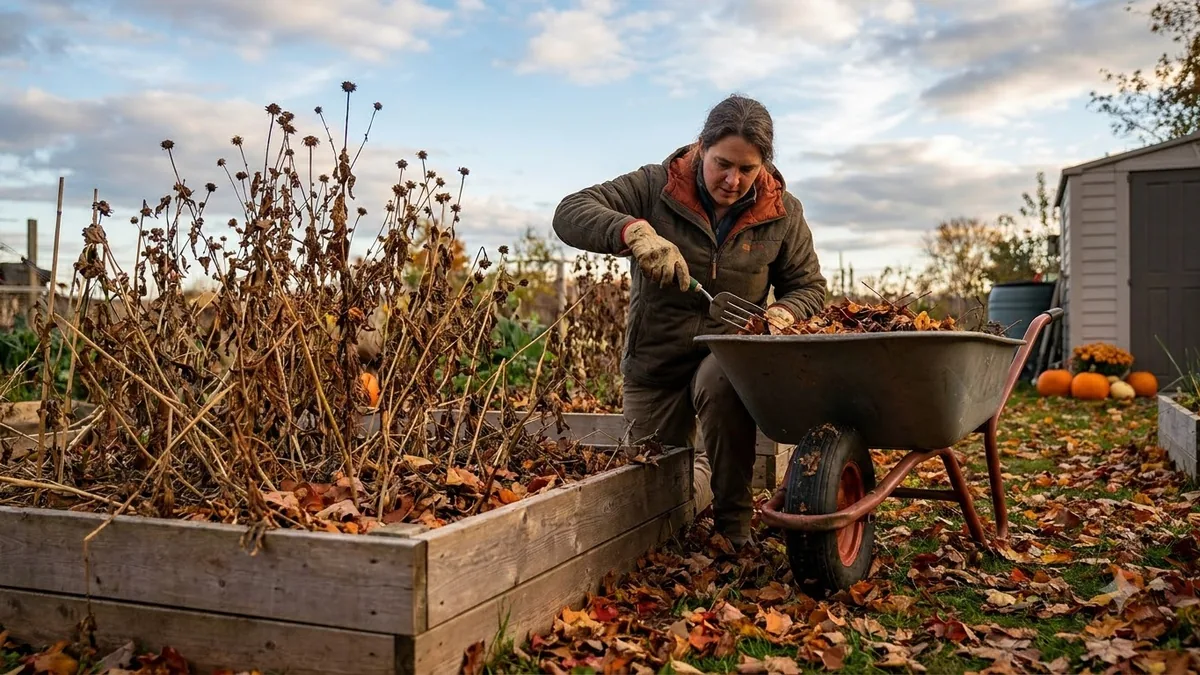
Once the days start shortening and the first cool nights roll in, the vegetable garden needs a different kind of attention than it did all summer. Good fall garden care isn't just about tidying up -- what you do (or skip) in the next few weeks has a direct effect on how much disease pressure, weed pressure and depleted soil you're dealing with come spring.
The short answer: before the first hard frost, harvest whatever's left, pull and dispose of any diseased or spent plants, test and amend your soil, get garlic or a cover crop into the ground, and clean and store your tools and supports.
Below is a full walkthrough of each of those steps -- why it matters, how to actually do it, and a condensed checklist you can run through bed by bed.
1. Harvest Everything Before the First Frost
Frost is the deadline that drives every other fall garden task, so start there. Tender, warm-season crops -- tomatoes, peppers, eggplant, basil, cucumbers, squash and beans -- are damaged or killed outright by even a light frost, so get everything usable off the vine before your local frost date arrives.
Not every crop needs to come off, though. Root vegetables like carrots, beets and parsnips actually sweeten after a light frost as the plant converts starches to sugar, and hardy greens such as kale and collards hold up fine into the mid-30s. Prioritize your harvest in this order:
- First: tender fruiting crops (tomatoes, peppers, eggplant, cucumbers, summer squash) -- these have zero frost tolerance.
- Next: tender herbs like basil, which blacken at the first cold snap.
- Leave in the ground a bit longer: root crops and cold-hardy greens, which benefit from cooler weather rather than suffering from it.
If a surprise frost is forecast before you've cleared everything, a floating row cover or an old bedsheet draped over the bed overnight can buy you a few extra days to bring in stragglers -- green tomatoes included, which will still ripen indoors on a sunny windowsill.
2. Clear Out Spent and Diseased Plants
Once a bed is harvested, pull the plant rather than leaving it to collapse in place over winter. Sort what you pull into two piles: healthy plant material can go into the compost, but anything showing blight, powdery mildew, leaf spot or a pest infestation needs to go straight into the trash.
This distinction matters more than most gardeners realize. A home compost pile usually doesn't get hot enough, consistently enough, to kill off fungal spores or insect eggs, which means diseased material you compost this fall can reintroduce the same problem into next year's soil when you spread that compost. Common culprits worth bagging up rather than composting:
- Tomato and potato foliage with blight symptoms
- Squash and cucumber vines with powdery mildew
- Any plant with visible pest egg clusters or borer damage
One exception worth knowing: beans and peas can be cut off at the soil line rather than pulled, leaving the roots in place. Legume roots host nitrogen-fixing bacteria, and letting those roots break down in the soil returns some of that nitrogen for next year's crops.
3. Test and Amend Your Soil
Fall is arguably the best time of year to work on your soil, not spring. Amendments like compost, aged manure and lime need time to break down and integrate before roots depend on them, and fall gives them a full winter to do that instead of racing the spring planting calendar.
Before adding anything, it's worth running a simple soil test -- a basic kit from a garden center or an inexpensive mail-in test through your local extension office will tell you your pH and major nutrient levels. From there:
- Low pH (acidic) soil generally benefits from garden lime, applied in fall so it has time to adjust the pH before spring.
- Depleted or heavy clay soil benefits from a generous layer of compost or aged manure worked into the top few inches.
- Sandy, fast-draining soil benefits from organic matter that helps it hold moisture and nutrients through winter rain and snowmelt.
Spread your amendments and lightly work them into the surface -- you don't need to deeply till a bed that's about to go dormant.
4. Plant Garlic and Fall Cover Crops
This is the one fall garden task that's easy to overlook because it doesn't feel like "cleanup" -- but skipping it means an empty, exposed bed all winter. Garlic is planted in fall specifically so it can establish roots before the ground freezes, then resume growing in early spring for a harvest the following summer. Break bulbs into individual cloves, plant them pointed end up a couple of inches deep, and mulch well.
For beds you're not planting garlic in, a cover crop is the next best thing. Cover crops like clover and winter rye protect bare soil from erosion and compaction over winter, choke out weeds that would otherwise get a head start, and add organic matter and nutrients back into the soil when you turn them under in spring. Winter rye is especially forgiving -- it germinates in cool soil and keeps growing even after a light frost, so it's a good choice for beds you clear later in the season. Clover has the added benefit of fixing nitrogen as it grows. For a deeper look at choosing and managing a cover crop in a home vegetable garden, Ohio State University's Ohioline fact sheet on cover crops in the garden walks through selection, planting windows and termination methods in more detail.
5. Mulch Perennial Beds and Overwintering Crops
Perennial vegetables and herbs -- asparagus, rhubarb, strawberries, chives, thyme -- don't get replanted every year, so protecting their roots through winter is what determines how strong they come back. A thick layer of straw, shredded leaves or bark mulch insulates the soil, moderates the freeze-thaw cycles that heave roots out of the ground, and slowly breaks down to feed the bed.
The same goes for anything you're overwintering in place, like garlic beds or cold-hardy greens you plan to keep harvesting into winter. Aim for a few inches of loose mulch, pulled slightly back from crowns and stems so they don't stay damp and rot.
6. Clean, Sharpen and Store Tools
It's tempting to skip this once the beds are done, but dirty tools are one of the easiest ways to carry disease from this season into next. Soil left caked on spades, pruners and trowels can harbor the same fungal spores and bacteria you just spent time removing from your beds, so wipe or rinse tools clean before they go into storage.
- Clean: scrub off caked soil with a wire brush, then wipe blades with a rag dampened in soapy water or diluted rubbing alcohol.
- Sharpen: a few passes with a file on pruners, hoes and spade edges makes spring work noticeably easier and creates cleaner cuts that heal faster on plants.
- Oil: a light coat of household oil on metal parts prevents rust over a damp winter; a linseed oil wipe-down keeps wooden handles from splitting.
- Store: hang tools or keep them off a concrete floor, and bring in anything plastic or ceramic -- pots, hoses, rain gauges -- that could crack if it freezes while wet.
Trellises, tomato cages and stakes should get the same soil wipe-down before being stacked away, since they touched the same diseased foliage you just cleared out.
7. What You Can Still Plant in Fall
Fall garden prep isn't only about closing things down -- in many zones there's still a window for a quick, cold-hardy crop before winter really sets in. Spinach, kale, lettuce, radishes and other fast-growing greens can often be direct-sown in late summer or early fall and harvested within four to six weeks, well before a hard freeze.
Check the days-to-maturity on your seed packet against your average first frost date, and count backward -- if there's enough runway left, it's worth filling an empty bed rather than leaving it bare. A cold frame or row cover extends that window further, letting you keep harvesting greens weeks after an unprotected bed would have shut down.
8. Protect Perennial Herbs Through Winter
Perennial herbs get lumped in with the rest of the garden come cleanup time, but they need a different approach than annual vegetable beds. Most cold-hardy herbs -- thyme, chives, oregano, sage and established mint -- need nothing more than a few inches of mulch to come through winter fine, while tender perennials like rosemary and bay often need to be dug up and brought indoors in anything colder than a mild winter.
Wait until after the first hard frost has knocked the top growth back before mulching, since mulching too early can trap warmth and encourage soft new growth that won't survive winter. Pull mulch a couple of inches back from the crown of each plant so it doesn't stay damp against the stem, which is a common cause of rot. According to NC State Extension's guidance on winterizing the herb garden, tender perennials benefit from a noticeably thicker mulch layer than fully hardy ones, along with a sheltered spot out of harsh winter wind.
Potted herbs need extra thought, since their roots are far more exposed to cold than anything planted in the ground. A few options:
- Move containers against a sheltered wall or into an unheated garage where they'll stay cold but not freeze solid.
- Group pots together and mulch around and over them, which insulates roots more than any single pot manages on its own.
- Bring truly tender herbs indoors -- rosemary and bay in particular -- to a bright, cool spot rather than gambling on outdoor survival.
Skip pruning most herbs hard in fall. Cutting perennial herbs back significantly in fall removes the very growth that helps insulate the crown, so save the hard pruning for late winter or early spring once new growth is about to start. A light trim to remove dead or floppy stems is fine in the meantime.
9. Winterize Irrigation Lines and Watering Equipment
It's easy to focus fall cleanup entirely on plants and soil and forget the hardware that watered them all season. Water left standing in drip lines, soaker hoses, backflow preventers and outdoor spigots expands as it freezes, and that expansion is exactly what cracks fittings, splits hose walls and bursts valves -- damage you usually don't discover until you turn everything back on in spring.
Work through your watering setup the same way you worked through your beds:
- Hoses: disconnect from the spigot, drain completely by walking the length of the hose or elevating one end, coil loosely and store indoors or in a shed rather than leaving them coiled on frozen ground.
- Drip lines and soaker hoses: disconnect from the water source, open the end caps and let gravity drain them, or use a shot of compressed air to push out any water left in low spots.
- Backflow preventers and shutoff valves: shut off the water supply to outdoor lines at the interior valve if you have one, then open the outdoor valve to drain residual water and leave it open over winter.
- Timers and rain barrels: remove battery-powered timers so the cold doesn't kill the battery or crack the housing, and drain rain barrels most of the way down so a hard freeze doesn't split the barrel.
If your garden runs on an in-ground irrigation system rather than surface hoses, it's worth having it professionally blown out with compressed air if you've never done it yourself -- a stuck valve or a section of line you miss can mean a much bigger repair than the cost of having it done properly the first time.
10. Plan Next Year's Crop Rotation While It's Fresh
By the time a bed is cleared, you know more about how this season actually went than you will next April. Sketching a quick map of what grew where -- and noting which beds had disease, pest pressure or just underperformed -- while it's still fresh is far more useful than trying to remember it months from now when you're standing in the garden with seed packets in hand.
That map is also the foundation for crop rotation, one of the simplest ways to keep soil-borne disease and pest populations from building up year over year. The basic idea is to avoid planting the same crop family in the same spot in consecutive years:
- Nightshades -- tomatoes, peppers, eggplant, potatoes -- share several soil-borne diseases and should move to a new bed each year.
- Cucurbits -- squash, cucumbers, melons, pumpkins -- are prone to their own set of soil pathogens and pests that build up if grown in the same spot repeatedly.
- Brassicas -- broccoli, cabbage, kale, cauliflower -- benefit from rotation to avoid clubroot and other soil-borne issues.
- Legumes -- beans and peas -- actually improve a bed by fixing nitrogen, which makes them a good crop to rotate into a spot that grew something nutrient-hungry the year before.
A three- to four-year rotation, where a given family doesn't return to the same bed for at least that long, is the general target most gardeners aim for. If a particular bed struggled with a soil-borne disease this year, SDSU Extension's fall cleanup guidance notes that switching that area to a few years of a non-susceptible crop, like sweet corn, onions, garlic or grasses, can be worth doing even outside your normal rotation schedule. Jot your notes down on paper, in a notes app, or right on a garden layout you keep from year to year -- the format matters less than actually capturing it before the details fade.
The Full Fall Garden Checklist
Use this condensed version to work through your garden bed by bed:
- Harvest tender, frost-sensitive crops first (tomatoes, peppers, cucumbers, squash, basil)
- Use a row cover or sheet overnight to protect stragglers from a surprise frost
- Pull spent plants rather than leaving them to collapse in the bed
- Bag and trash diseased or pest-infested plant material -- never compost it
- Cut beans and peas at the soil line to leave nitrogen-fixing roots in place
- Run a basic soil test to check pH and nutrient levels
- Work compost, aged manure or lime into beds that need it
- Plant garlic cloves in beds set aside for a summer harvest
- Sow a cover crop like clover or winter rye in any bed left bare
- Mulch perennial beds and overwintering crops a few inches deep
- Clean, sharpen and oil hand tools before storing them
- Wipe down and store trellises, cages and stakes
- Bring in ceramic or plastic pots, hoses and anything that could crack if frozen
- Direct-sow a quick cold-hardy crop (spinach, kale, lettuce, radish) if your frost date allows it
- Mulch hardy perennial herbs and bring tender ones like rosemary and bay indoors
- Drain hoses, drip lines and irrigation valves before the first hard freeze
- Sketch a bed map and disease notes now to plan next year's crop rotation
Frequently Asked Questions
When should I start fall garden cleanup?
Start as soon as summer crops stop producing, and aim to finish the bulk of your fall garden chores before your first hard frost. Check your local average first frost date and work backward from there.
Can I compost diseased plants from my vegetable garden?
No. Home compost piles rarely get hot enough to reliably kill fungal spores and pest eggs, so diseased material should go in the trash instead, keeping your compost pile reserved for healthy plant matter.
Do I really need to plant a cover crop every fall?
It's optional but genuinely worthwhile -- bare soil erodes and loses nutrients over winter, while a cover crop protects it, suppresses weeds, and adds organic matter back in when turned under in spring.
Can you compost frost-killed plants?
Yes, as long as they were healthy going into the frost. A hard freeze that simply kills the plant tissue doesn't create the same disease risk as blight or powdery mildew, so frost-blackened tomato vines, squash foliage and other spent-but-healthy plants can go straight into the compost pile. Plants that were diseased still belong in the trash, regardless of whether frost also killed them.
Should you till a vegetable garden in fall or spring?
Either can work, and it largely comes down to your soil. Fall tilling is useful for working compost, manure or lime into heavy clay before winter, while spring tilling happens right before planting and can dry soil out if done too early. Many gardeners with established, loose soil skip tilling altogether and simply spread amendments on the surface each fall.
Do you need to cover raised beds for winter?
Not usually, though a layer of mulch or a cover crop protects the soil far better than leaving it bare. Raised beds lose heat faster than in-ground beds because they're exposed on more sides, so if you're overwintering crops in one, mulching more heavily than you would in a ground-level bed helps compensate.
What happens if you skip fall cleanup entirely?
Nothing catastrophic happens in a single season, but the risks compound. Diseased foliage left in place overwinters fungal spores and insect eggs, bare soil erodes and compacts, weeds get a head start, and unprotected perennials are more likely to suffer winter damage -- all of which show up as extra work and lower yields the following spring.
Can you still harvest vegetables after the first light frost?
Often, yes. A light frost damages tender crops like tomatoes and basil but leaves cold-hardy vegetables such as kale, spinach, carrots and Brussels sprouts unharmed or even improved, since many of them convert starches to sugar in cool weather. It's a hard, killing freeze -- not the first light frost -- that actually ends the harvest for good.
Is it too late to plant a cover crop in late fall?
It depends on the crop and your climate, but many gardeners plant cover crops later than they realize is possible. Winter rye in particular can be seeded well into fall and will still germinate in cool soil, while legume cover crops generally need more time to establish before the ground freezes. If you're planting late, lean toward a cold-tolerant grass like winter rye rather than a legume.
Should you drain irrigation lines and hoses before winter?
Yes -- any water left in drip lines, soaker hoses or exposed pipe can freeze, expand and crack fittings or split hose walls. Disconnect and drain hoses before storing them, and shut off and drain irrigation lines and outdoor spigots before the first hard freeze so you're not troubleshooting cracked equipment come spring.
Conclusion
None of these fall garden tasks take long individually, but done together they make a real difference in how your soil, tools and perennial beds come through winter. Work through the checklist bed by bed rather than all at once, and by the time the ground freezes, next year's garden will already be off to a better start.
Thanks for reading!