
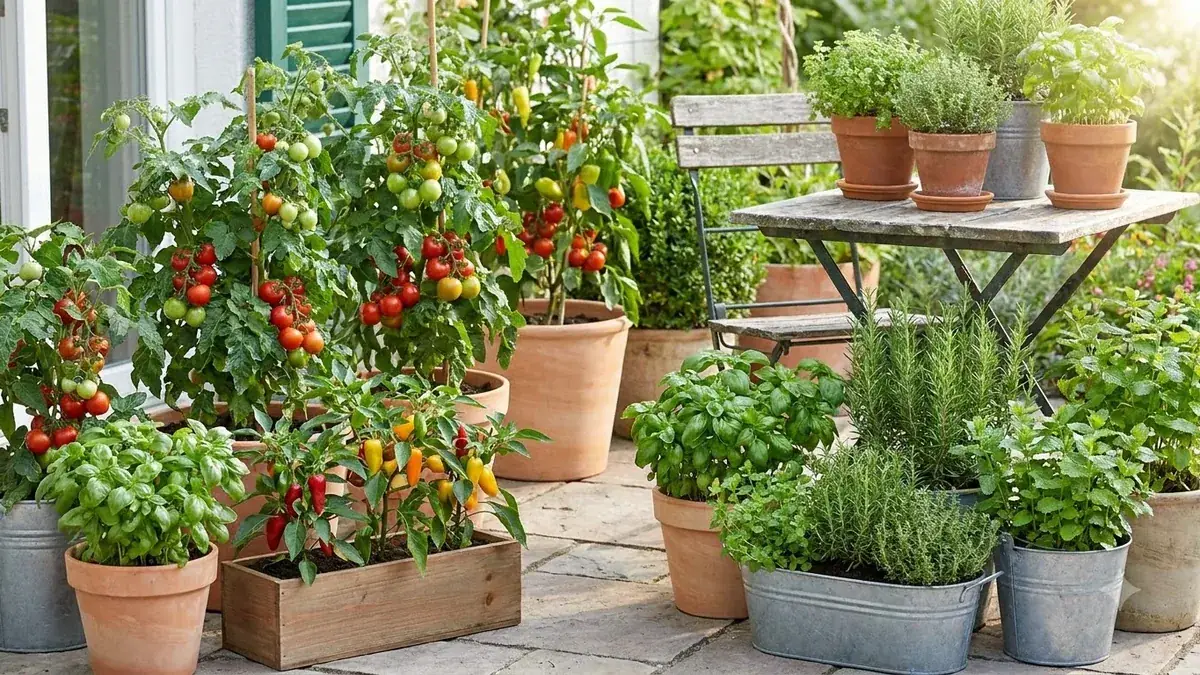
No yard, no raised bed, no problem. A patio, a balcony or even a sunny doorstep is enough space to grow a genuinely productive vegetable garden, as long as you get a handful of basics right before you plant.
The short answer: how to grow vegetables in containers comes down to three variables -- container size, sunlight and watering frequency. Almost any vegetable can grow in a pot if the container is big enough, drains well, and is filled with potting mix instead of garden soil.
Below is a full rundown of container vegetable gardening for beginners -- how to pick the right pot for each crop, what to fill it with, and how to lay out a small patio so everything gets what it needs.
Choosing the Right Container
Drainage holes are non-negotiable. Vegetable roots that sit in standing water rot within days, so before anything goes in the soil, make sure the container has holes in the bottom -- and if it doesn't, drill or punch a few yourself. A layer of gravel at the bottom is not a substitute for real drainage holes; it just raises the water table inside the pot.
Beyond that, material comes down to tradeoffs:
- Plastic pots -- lightweight, cheap and hold moisture longer than porous materials, which means less frequent watering. The downside is heat: dark plastic can get hot enough in direct sun to stress roots.
- Fabric grow bags -- excellent drainage and airflow, which prunes roots naturally and tends to produce healthier root systems. They dry out faster than plastic, though, so they need more frequent watering in hot weather.
- Terracotta and ceramic -- attractive and heavy enough to resist tipping in wind, but the porous clay wicks moisture out of the soil, meaning more frequent watering than plastic or glazed pots.
- Repurposed containers -- a 5-gallon bucket, a wooden crate or a food-grade tote all work fine as long as you add drainage holes and the material hasn't held anything toxic.
Whatever material you choose, size matters more than style. A container that's too small forces you to water constantly and still won't support full growth -- when in doubt, size up.
Container Size by Vegetable
This is the single most common mistake in container vegetable gardening for beginners: undersizing the pot. Use this table as a baseline minimum for a healthy, productive plant.
| Vegetable | Minimum Container Size |
|---|---|
| Tomatoes (patio/determinate varieties) | 5-gallon pot, at least 12 in. deep and wide |
| Tomatoes (full-size/indeterminate varieties) | 15-20 gallon container, 24 in. deep and wide |
| Peppers | 3-5 gallon pot, at least 12 in. deep |
| Lettuce and leafy greens | 6-8 in. deep, any width -- roots are shallow |
| Bush beans | 5-gallon pot, at least 12 in. deep |
| Radishes | 6-8 in. deep, any width |
| Herbs (basil, thyme, chives) | 6-in. pot minimum (about 1 gallon) |
| Cucumbers | 5-gallon pot minimum, trellised vertically |
Full-size indeterminate tomatoes are the outlier -- they need the most root room of any common container vegetable. If you don't have space for a 20-gallon pot, choose a determinate or patio-bred tomato variety instead; they're built to stay compact and still fruit well in a 5-gallon container.
Use Potting Mix, Not Garden Soil
Never fill a container straight from the garden bed -- use a bagged potting mix instead. Garden soil is formulated by nature to work in open ground, where earthworms, roots and freeze-thaw cycles keep it loose. Scoop that same soil into a container and it compacts into a dense, airless block that drains poorly and suffocates roots.
Potting mix, by contrast, is a blend of lightweight ingredients -- peat or coconut coir, perlite, vermiculite and compost -- engineered specifically to stay loose and drain freely inside an enclosed pot. This is the biggest structural difference between container gardening and growing in the ground or a raised bed: an in-ground bed has essentially unlimited soil volume for excess water to drain into, while a container only has the space you gave it, so the mix inside has to drain well on its own.
Look for a mix labeled for containers or "potting soil" specifically, ideally with some slow-release fertilizer already blended in to give seedlings a head start.
Best Vegetables for Beginners in Containers
Not every crop is equally forgiving in a pot. If this is your first attempt at container gardening vegetables, start with the varieties below -- they tolerate the occasional missed watering or imperfect container size far better than most.
- Lettuce and salad greens -- shallow roots, fast growth, and a short enough life cycle that you'll have a full harvest before mistakes catch up with the plant.
- Radishes -- ready in as little as three to four weeks, which makes them a quick confidence win and an easy way to test a new container setup.
- Bush beans -- compact, don't need staking like pole varieties, and are notably tolerant of uneven watering compared to most fruiting vegetables.
- Patio or dwarf tomatoes -- bred specifically for container life, with a smaller root system and shorter, sturdier stems than full-size tomato varieties.
- Peppers -- slow and steady growers that rarely bolt or fail outright, even with inconsistent care.
- Herbs -- basil, chives, thyme and mint all thrive in small pots and are close to impossible to kill outright, making them the lowest-risk way to start.
Once one or two of these succeed, expand into cucumbers or full-size tomatoes -- both are rewarding but ask a bit more of the grower in terms of container size and support.
Watering and Feeding Containers
Containers dry out significantly faster than ground soil, because the roots are confined and exposed to air and sun on every side of the pot, not just the top. On hot summer days, some containers -- especially smaller ones and unglazed terracotta -- may need water once or even twice a day.
Check moisture with a simple finger test: push a finger an inch or two into the mix. If it's dry at that depth, water thoroughly until it runs from the drainage holes. Watering lightly and often trains roots to stay shallow, so aim for a deep soak rather than a quick splash.
Feeding also has to happen more often in containers than in the ground, because every watering flushes some nutrients straight out through the drainage holes. A slow-release fertilizer mixed in at planting time is a good foundation, but most fruiting vegetables -- tomatoes, peppers, cucumbers -- also benefit from a diluted liquid fertilizer every one to two weeks once they start flowering. A potting mix with fertilizer already blended in typically supplies enough nutrients for only the first several weeks of growth, after which a regular feeding schedule becomes necessary to keep plants productive.
Self-Watering Containers and Wicking Systems
For anyone who travels, works long hours, or gardens somewhere hot and windy, a self-watering (or "wicking") container solves the single biggest headache of growing vegetables in pots: how fast they dry out. Instead of watering from the top, a self-watering container holds a reservoir of water beneath a perforated shelf or false bottom. The potting mix sits on top of that shelf, and a wick -- usually a strip of fabric or a column of soil pushed down through the perforations -- pulls water upward as the roots use it. Plants draw only what they need, which smooths out both the soggy-then-bone-dry cycle that stresses roots and the daily watering chore that trips up beginners.
You can buy a self-watering planter outright, or build one cheaply from two stacked food-grade buckets: the top bucket holds soil and sits inside the bottom one, which serves as the reservoir, with a length of tubing running down to the water and holes drilled to let roots reach it. University of Maryland Extension's guide to self-watering containers walks through the build in detail and notes that a well-sized reservoir can cut daily watering down to a simple top-off every few days in most weather.
Wicking systems work best for consistently thirsty crops -- tomatoes, cucumbers and peppers all reward the steady moisture. They're less necessary for shallow-rooted greens and radishes, which don't have deep enough roots to reach a reservoir anyway and are usually better off in a shallow tray watered the conventional way.
Small-Space and Patio Layout Ideas
A good container vegetable garden layout makes the most of a small footprint without crowding plants into competition for light and airflow. A few patio vegetable garden ideas that scale well to balconies and small patios:
- Trellis vertically. Cucumbers, pole beans and even some compact tomato varieties can climb a trellis or cage instead of sprawling, freeing up floor space for other pots.
- Group containers by water needs. Thirsty crops like tomatoes and cucumbers next to each other, and drought-tolerant herbs in their own cluster, makes watering faster and more consistent.
- Use rail planters for a fence or balcony edge. Narrow rail-mounted boxes are ideal for shallow-rooted crops like lettuce, herbs and radishes, and they don't eat into usable floor space at all.
- Add a tiered plant stand. Stacking containers at different heights increases the number of pots that fit in a given footprint and helps taller and shorter plants each get their share of sun.
Whatever the layout, leave a few inches of air gap between containers. Airflow between pots matters almost as much as it does between plants in the ground -- crowded containers trap humidity and raise the risk of fungal disease.
Extending the Season with Container Vegetables
One advantage containers have over an in-ground bed is portability, and that advantage is most valuable at the edges of the growing season. When an unexpected frost threatens in spring or fall, a container can simply be carried into a garage, shed or covered porch for the night -- buying tender crops like tomatoes and peppers another few weeks that an in-ground plant would lose outright.
Cool-season crops make this even easier. Lettuce, spinach, kale and other leafy greens tolerate light frost and can be planted in containers in late summer for a fall harvest, then moved to a sheltered spot or covered with a frost cloth as nights get colder. University of Illinois Extension's guidance on overwintering container plants notes that hardy perennial herbs and some cold-tolerant vegetables can be carried through winter in containers if they're grouped together, insulated, and kept out of harsh wind, since roots in a pot are far more exposed to cold than roots insulated by the surrounding mass of ground soil.
If outdoor space runs out entirely once temperatures drop, many compact vegetables -- lettuce, herbs and even dwarf peppers -- can move indoors to a bright, south-facing window or under a grow light and keep producing through winter. The tradeoff is light: an indoor windowsill rarely matches the five to eight hours of direct sun most fruiting vegetables need, so leafy greens and herbs are a more realistic year-round indoor crop than a full-size tomato.
Common Container Gardening Mistakes to Avoid
Most container vegetable failures trace back to a handful of repeatable mistakes rather than bad luck. Watching for these upfront saves a season of stunted or disappointing plants.
- Underestimating how much sun fruiting vegetables need. Tomatoes, peppers and cucumbers are heavy sun feeders; Clemson Cooperative Extension's container vegetable gardening factsheet recommends at least five hours of direct sun for fruiting crops, with six to eight hours producing noticeably better yields. A patio corner that looks bright enough at a glance often falls short once you actually track hours of direct light across a full day.
- Picking the wrong pot material for the climate. Dark plastic and unglazed terracotta both work fine in mild, humid climates, but in a hot, dry, sun-baked spot they can overheat roots or wick away moisture faster than you can replace it. In consistently hot regions, a light-colored or double-walled container keeps the root zone cooler.
- Skipping drainage holes, or not adding enough of them. A single small hole in the bottom of a large pot often isn't enough; heavy, wet potting mix can clog it, leaving standing water even though the pot technically "has drainage." Multiple holes, with a layer of mesh or a coffee filter over each one to stop the mix from washing out, keep water actually moving through.
- Forgetting to feed the plant after the first few weeks. Even a potting mix with fertilizer pre-blended in only carries a plant so far, since every watering session leaches nutrients out through the drainage holes. Without a follow-up feeding schedule, plants that looked healthy in June often stall out by July, even with perfect watering.
- Crowding too many plants into one pot. A container sized for one tomato plant can't support three, no matter how healthy the seedlings look at transplant time. Overcrowded roots compete for the same limited soil volume and water, and yields drop for every plant sharing the pot.
- Reusing old potting mix indefinitely without amending it. Mix that has grown a full season of vegetables loses structure and nutrients, and can carry over pests or disease from the previous crop. Refresh at least a portion of it -- or work in fresh compost and slow-release fertilizer -- before replanting a container that's already been through a full growing cycle.
Most of these mistakes are easy to avoid once you know to look for them, and none require any special equipment or expertise -- just a bit more attention than an in-ground bed demands.
Frequently Asked Questions
What size container do I need to grow vegetables?
It depends on the crop. Shallow-rooted vegetables like lettuce and radishes only need 6-8 inches of depth, bush beans and peppers do well in 3-5 gallon pots, and full-size tomatoes need at least 15-20 gallons of root room. As a rule, bigger is safer -- a container that's too small dries out fast and stunts growth.
How often should I water vegetables in containers?
Check containers daily, and twice a day during hot summer stretches, since potting mix in a raised pot dries out far faster than ground soil. Push a finger an inch or two into the mix -- if it's dry at that depth, it's time to water.
Can you use a 5-gallon bucket to grow vegetables?
Yes. A 5-gallon bucket with drainage holes drilled in the bottom is large enough for a patio tomato, a pepper plant, bush beans or cucumbers, as long as it's filled with potting mix rather than garden soil. It's one of the cheapest ways to start a container vegetable garden.
Do container vegetables need more sun than plants grown in the ground?
Not more, but they're less forgiving about getting it. Fruiting vegetables like tomatoes, peppers and cucumbers need five to eight hours of direct sun whether they're in a bed or a pot, but a container stuck in a shady corner can't compensate the way an in-ground plant sometimes can by stretching roots toward better light elsewhere.
Can you reuse potting mix year after year?
You can, but it needs help first. A full season of growth depletes nutrients and breaks down the mix's structure, so refresh at least a third of the volume with fresh potting mix or compost before replanting, and work in a slow-release fertilizer to replace what the previous crop used up.
What's the biggest mistake beginners make with container vegetables?
Undersizing the container. A pot that's too small for the crop dries out faster than anyone can keep up with, restricts root growth, and stunts the plant no matter how well it's watered and fed -- when unsure, choosing the larger of two container options is almost always the safer call.
Do containers need to be elevated off the ground?
It helps but isn't mandatory. Setting pots on feet, bricks or a plant stand keeps drainage holes clear so water can actually escape, improves airflow underneath, and stops containers from sitting directly in puddled water after a heavy rain -- all of which lower the risk of root rot.
Can you grow container vegetables indoors year-round?
Leafy greens and herbs, yes, especially with a grow light supplementing a sunny window. Fruiting vegetables like tomatoes and peppers are harder to manage indoors because they need more direct light than most windows provide and often need help with pollination that outdoor insects normally handle for free.
How do you stop containers from drying out too fast in summer?
Upsize the container if you can, since more soil volume holds more moisture. Beyond that, group pots together so they shade each other's sides, add a layer of mulch on top of the mix, and consider a self-watering design with a built-in reservoir for the thirstiest crops.
Are fabric grow bags better than plastic pots?
Not universally -- it's a tradeoff. Fabric grow bags drain and aerate roots exceptionally well, which many plants like, but that same airflow means they dry out faster and need more frequent watering than plastic. In a hot, dry climate, plastic's moisture retention can be the more practical choice, while grow bags are more forgiving in humid conditions where overwatering is the bigger risk.
Conclusion
Container vegetable gardening removes almost every excuse for not growing your own food -- no yard, no raised bed and no in-ground soil required. Start with a properly sized pot, real potting mix, and one or two forgiving crops like lettuce or a patio tomato -- then add more containers as you get a feel for how fast they dry out and how much your plants actually need.
Thanks for reading!