
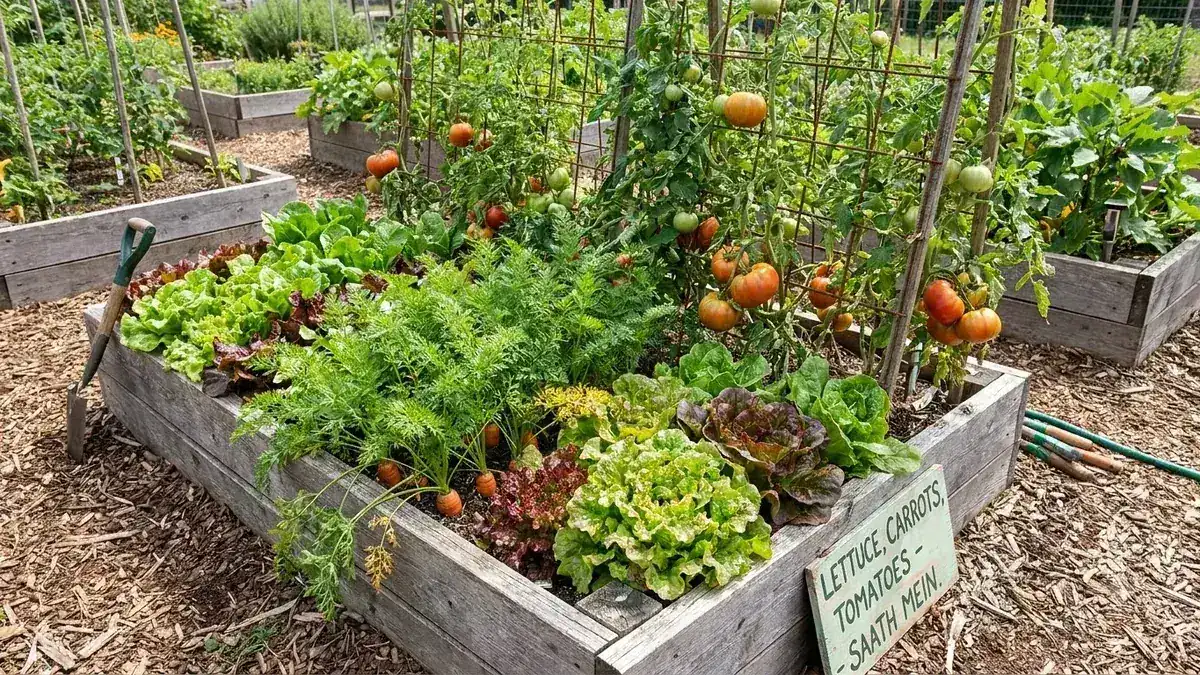
A raised bed isn't just a tidier version of a ground-level garden -- it's a different growing environment entirely, with its own soil, its own drainage and its own microclimate. Some vegetables take full advantage of that. Others barely notice the difference, and a few actively fight against it. Knowing which is which before you start planting saves you a wasted season.
The short answer: tomatoes, lettuce and other leafy greens, radishes, carrots and beets, bush beans, peppers, herbs and strawberries are the best vegetables for raised beds. They're the crops that most directly benefit from loose, fast-draining soil, an early start in spring, and a growing space that never gets walked on.
Below is why raised beds favor these particular crops, a closer look at each one, which vegetables tend to struggle in a raised bed instead, and how to lay the whole thing out so nothing ends up shading its neighbors.
Why Raised Beds Suit Certain Vegetables Better Than Others
Before deciding what to plant in a raised garden bed, it helps to understand what actually changes when you lift a growing space up off the ground. Three differences matter most, and together they explain almost every recommendation in this guide.
Raised beds warm up faster in spring. Soil piled above ground level gets more direct sun exposure and drains excess moisture instead of holding onto cold, wet ground. That can mean soil temperatures several degrees warmer than an in-ground bed at the same time of year -- enough to let you set out heat-loving crops like tomatoes and peppers a week or two earlier than gardeners planting directly in the ground.
Raised beds drain better. Because the growing medium sits above the surrounding soil, gravity pulls excess water down and out rather than letting it pool around plant roots. That's a major advantage for crops that rot quickly in soggy soil, and it also means less risk of the fungal diseases that thrive in waterlogged conditions.
Raised beds never get compacted by foot traffic. Because you tend a raised bed from the path around it rather than stepping into it, the soil inside stays loose and full of air pockets all season. That loose structure is exactly what shallow, delicate or forking roots need to develop properly -- which is why root vegetables and leafy greens do so well in a raised bed compared to a heavily walked-on garden row.
For a deeper dive into how each of these factors affects specific crops, the University of Maryland Extension's guide to growing vegetables in raised beds breaks down crop-by-crop spacing and soil requirements in more detail.
The Best Vegetables for Raised Beds
These are the crops that consistently show up as the best plants for raised garden beds, and the specific reason each one benefits from being grown that way.
1. Tomatoes
Tomatoes are a heat-loving crop, and the faster spring soil warm-up a raised bed provides lets you get them in the ground sooner and growing more vigorously from the start. The improved drainage also matters a great deal here -- tomatoes are prone to root rot and splitting fruit in soil that stays too wet, and a raised bed's sharper drainage largely solves both problems. Just give each plant 18 to 24 inches of space and a sturdy cage or stake, since raised-bed soil dries out faster and needs more consistent watering than ground-level soil.
2. Leafy Greens (Lettuce, Spinach and Kale)
Lettuce, spinach and kale are some of the easiest vegetables to grow in raised beds because their roots are shallow and don't need much depth to be productive. What they do need is loose, uncompacted soil and consistent moisture, both of which a raised bed delivers by default. They're also fast growers, which makes them a natural choice for tucking into gaps between slower crops like tomatoes and peppers early in the season, before those larger plants fill out and shade the bed.
3. Root Vegetables (Carrots, Beets and Radishes)
Root vegetables are where a raised bed makes the single biggest difference in the finished crop. Carrots and beets grown in rocky, compacted ground come out forked, stunted or twisted, but the same seeds grown in a raised bed's loose, stone-free soil come out straight and full-sized, because the roots never hit resistance as they push down. Radishes take this even further -- they mature in as little as three to four weeks, so they're one of the fastest returns you'll get from a raised bed all season.
4. Bush Beans
Bush beans are compact, don't need a trellis, and fit neatly into a raised bed without competing for much space. They also fix nitrogen in the soil as they grow, which is a genuine benefit in a raised bed where the growing medium gets reused season after season. Most varieties are ready to harvest in 50 to 60 days, and because the plants stay under two feet tall, they won't shade out shorter neighbors the way pole varieties can.
5. Peppers
Peppers want exactly what a raised bed offers: warm, well-drained soil and full sun. Cold or soggy soil is one of the main reasons pepper transplants stall out in spring, and a raised bed largely removes that risk by warming up earlier and never staying waterlogged. Peppers are also sensitive to root disturbance, so the fact that raised-bed soil stays loose and undisturbed by foot traffic gives their root systems room to establish without setbacks.
6. Herbs
Most culinary herbs -- basil, parsley, chives, cilantro and thyme among them -- actually prefer the leaner, faster-draining soil a raised bed provides over the richer, moisture-retentive soil vegetables like squash want. Tucking herbs along the edges of a raised bed also puts them within easy reach for regular harvesting, and their shallow root systems mean they rarely compete for space with the deeper-rooted vegetables growing nearby.
7. Strawberries
Strawberries are often overlooked as raised garden bed vegetables' companion crop, but they're one of the best fits available. Their shallow root systems and low tolerance for wet feet make a raised bed's drainage a near-perfect match, and the elevated soil keeps developing berries up off damp ground, which cuts down considerably on rot and slug damage. Plant them along the edge of the bed where they can spill over the side without crowding taller crops.
Vegetables That Struggle in Raised Beds
Not every vegetable is a good match for a raised bed, and it's worth knowing which ones before you commit space to them.
- Corn -- corn is wind-pollinated and needs to be planted in blocks of at least four rows so pollen can reliably reach neighboring plants; it also sends roots down further than most other vegetables. Most raised beds simply aren't wide or deep enough to give corn the root room and block spacing it needs to pollinate and yield well.
- Sprawling vine crops (melons, pumpkins and winter squash) -- left to sprawl along the ground, these vines will happily cover an entire raised bed and spill out over the sides into the path. They aren't impossible to grow in a raised bed, but they only work well if you train them vertically up a sturdy trellis, which keeps their footprint small and frees up ground space for other crops.
Raised Bed Size and Depth by Crop Type
How deep you build a raised bed should follow the crops you plan to grow in it, since a frame that's plenty deep for lettuce can leave tomatoes root-bound by midsummer. Shallow-rooted crops like lettuce, spinach, radishes and most herbs are productive with just 6 to 8 inches of loose soil, which is one reason a low, budget-friendly frame is often all a salad garden needs. Bush beans and similar mid-depth crops do best with 8 to 10 inches, enough room for their root systems to spread without the extra lumber and soil a deeper bed requires.
Tomatoes, peppers and other heavy feeders need more room underneath them. Give tomatoes and peppers at least 12 inches of soil depth, and go closer to 18 inches if the bed sits on a hard surface like a patio or driveway rather than open ground, since those crops can't send roots down into native soil the way an in-ground bed allows. Root vegetables land in the middle of that range -- carrots and beets want close to 12 inches of loose, stone-free soil to grow long and straight, though shorter round varieties can get by with as little as 10. The University of Maryland Extension's guide to building raised beds is a useful reference if you're framing a bed from scratch and want depth recommendations by material and crop.
Width matters just as much as depth. A bed wider than four feet forces you to lean or step into the soil to reach the middle, which undoes the whole benefit of never compacting it in the first place -- so keep width to three or four feet regardless of how deep you go.
Succession Planting in a Raised Bed for Continuous Harvest
A raised bed's fast-draining, quick-warming soil doesn't just help crops get started earlier in spring -- it also lets you replant the same square foot of space two or three times over a single season, which is where succession planting earns its keep. Instead of sowing an entire crop of radishes or lettuce all at once, sow a short row every 10 to 14 days so you're harvesting a steady trickle of mature plants rather than a single glut that bolts or goes to seed before you can use it all.
Succession planting works best with fast-maturing crops -- radishes, lettuce, spinach, bush beans and most herbs are all good candidates because they clear the bed quickly enough to make room for a second or third planting. As soon as a spring crop like lettuce or radishes finishes, pull it and replant that space immediately rather than leaving it bare, since bare raised-bed soil loses moisture fast and invites weeds that establish before your next crop does. Many gardeners follow an early lettuce or radish crop with a heat-tolerant summer planting of bush beans, then finish the season with a fall sowing of spinach or kale once the weather cools again.
This kind of rotation also spreads out your workload and your harvest instead of concentrating both into a single frantic week. A raised bed's improved drainage and looser soil make the turnaround between plantings faster than it would be at ground level, since there's no compacted soil to rework between crops -- just a quick top-up of compost and you're ready to sow again.
Vertical Trellising to Fit More Crops in a Raised Bed
A raised bed's footprint is fixed, but its usable growing space isn't -- training vine and climbing crops upward instead of letting them sprawl across the soil surface can effectively double what a small bed produces. Cucumbers, pole beans, peas and even compact vining squash varieties can all be trained up a trellis, freeing the soil underneath for shallow-rooted crops like lettuce or herbs. The trellis itself can be as simple as a cattle-panel arch, a row of bamboo stakes tied into a teepee, or a flat panel of netting anchored to the bed frame.
Position trellised crops along the north edge of the bed so their height doesn't shade shorter neighbors as the season goes on -- the same principle that applies to tall, unsupported crops like tomatoes applies even more strongly here, since a fully grown trellis can cast shade across an entire bed by midsummer. Vertical growing also improves airflow around the foliage, which cuts down on the fungal diseases that tend to develop when leaves stay damp and crowded against the soil.
Fruit stays cleaner when it's up off the ground, too. Cucumbers and beans grown flat on raised-bed soil are prone to rot and slug damage where they touch the dirt, while the same crops grown vertically stay dry and are easier to spot and pick before they overripen. The Oregon State University Extension's raised bed gardening guide covers trellis spacing and support options in more detail if you're planning a bed around climbing crops.
Planning Your Raised Bed Layout
Once you've picked your crops, how you arrange them in the bed matters almost as much as what you chose.
- Put tall and trellised crops on the north side. Tomatoes, trellised cucumbers and pole beans cast long shadows as they grow. Placing them on the north end of the bed keeps that shade from falling across shorter crops like lettuce and root vegetables for most of the day.
- Follow basic spacing, not garden-row spacing. Because raised-bed soil is so much looser and richer than average garden soil, most crops can be planted closer together than seed packet instructions suggest for row gardening -- just don't crowd them enough to block airflow, which invites disease.
- Use companion planting to fill gaps. Fast-growing crops like radishes and lettuce can share space with slower ones like tomatoes and peppers early in the season, coming out of the ground before the larger plants need the room. Pairing herbs like basil near tomatoes is a classic combination that makes efficient use of a small footprint.
- Leave room to reach the middle. A raised bed wider than four feet makes the center hard to tend without stepping into the soil. Keep beds to about three or four feet wide so you can reach every plant from the path.
Frequently Asked Questions
What are the easiest vegetables to grow in raised beds?
Lettuce, radishes, bush beans and herbs like basil and chives are the easiest vegetables to grow in raised beds. They germinate quickly, tolerate minor mistakes in watering, and don't need the deep, uniform soil that root crops like carrots demand.
What vegetables should you avoid planting in a raised bed?
Corn and sprawling vine crops like melons, pumpkins and winter squash are the hardest to fit into a raised bed. Corn needs more block-planted root room than most beds provide, and sprawling vines will swallow the whole bed unless you train them up a trellis.
How deep should a raised bed be for vegetables?
Most vegetables do well in a raised bed that's 10 to 12 inches deep. Root crops like carrots and beets benefit from closer to 12 inches of loose soil, while shallow-rooted greens and herbs can get by with as little as 6 to 8 inches.
How many vegetables can you fit in a 4x8 raised bed?
A well-planned 4x8 raised bed can comfortably hold 8 to 12 mature plants along with several rows of smaller crops tucked between them -- for example, 2 tomato plants, 4 pepper plants, a row of bush beans, and a border of lettuce, radishes or herbs filling in the remaining edges. Using intensive spacing rather than traditional row spacing is what makes that density possible in a raised bed.
Can you grow corn in a raised bed at all?
Yes, but only if the bed is large enough to plant corn in a block rather than a single row -- corn is wind-pollinated, so anything less than a 4-foot-square block of plants usually pollinates poorly and produces sparse, gappy ears. A single standard raised bed dedicated entirely to a tight block of corn can work, but splitting a bed between corn and other crops rarely does.
What vegetables should never go in the same raised bed together?
Fennel is the one true loner -- it releases compounds that suppress the growth of most other vegetables and is best kept in its own container or bed entirely. Beyond that, avoid pairing tall, wide-branching crops like tomatoes directly beside sun-loving low crops like peppers, since the shade alone can cut yields even without any chemical interaction between the plants.
Do raised beds need full sun for all vegetables?
Most fruiting vegetables -- tomatoes, peppers, beans and squash -- need a minimum of 6 to 8 hours of direct sun to produce well, even in a raised bed's improved growing conditions. Leafy greens and herbs are more forgiving and can still produce a decent harvest with as little as 4 hours of direct sun or filtered light through part of the day.
How deep does a raised bed need to be for tomatoes vs. lettuce?
Tomatoes need considerably more root room than lettuce -- plan on at least 12 inches of soil depth for tomatoes, and closer to 18 inches if the bed sits on pavement rather than open ground. Lettuce, by contrast, is shallow-rooted enough to thrive in as little as 6 to 8 inches, which is why the two are often grown in beds of different depths.
Can you grow fruit trees or bushes in a raised bed?
Dwarf and semi-dwarf fruit bushes like blueberries and currants can do well in a deep raised bed, particularly since blueberries need the acidic, well-drained soil a raised bed makes it easy to control. Full-sized fruit trees are a poor match, though -- their root systems quickly outgrow even a large bed and are better suited to being planted directly in the ground.
What's the best first-year vegetable to try in a new raised bed?
Bush beans or lettuce are the best first-year choices for a new raised bed, since both germinate reliably, tolerate a range of soil and watering mistakes, and mature quickly enough to show results within a matter of weeks. That fast feedback makes it easier to fine-tune watering and spacing before committing to slower, pickier crops like tomatoes the following season.
Conclusion
The best vegetables for raised beds are the ones that make the most of what a raised bed does differently -- faster warming soil, sharper drainage and roots that never fight compacted ground. Start with tomatoes, leafy greens and a few root vegetables in your first bed, then expand into beans, peppers, herbs and strawberries as you get a feel for how much your space can hold.
Thanks for reading!